
What Is a TV Soundbar: Enhance Your Audio Experience
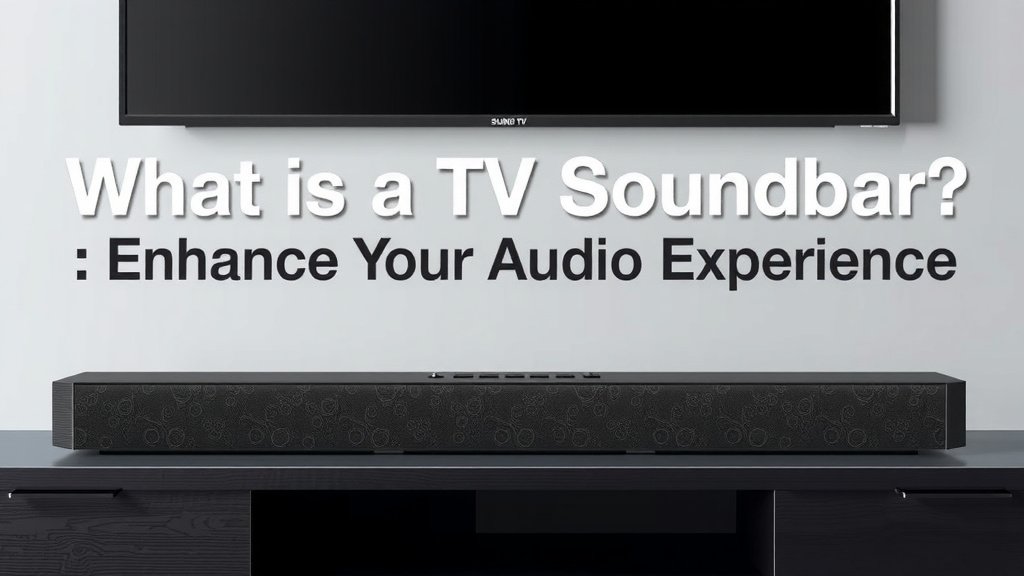
A TV soundbar is a sleek, long speaker system designed to significantly improve your TV’s audio. It’s a simple yet effective way to get richer, clearer sound without the clutter of multiple speakers. Think of it as a big upgrade for movie nights or even just watching the news.
Unlike your TV’s built-in speakers, which are often small and tinny, a soundbar uses larger drivers. This results in more immersive sound with better bass. Many soundbars also offer surround sound effects, making you feel like you’re right in the middle of the action.
- A TV soundbar is a simple speaker bar.
- It makes your TV sound much better.
- You get clearer dialogue and deeper bass.
- It’s an easy way to upgrade your home theater.
Ready to hear the difference? Let’s break down exactly what a soundbar is and why you might want one.
Understanding Your TV’s New Sound Companion
So, you’ve got a big, beautiful TV, but the sound feels a little… underwhelming? You’re not alone. That’s where a TV soundbar steps in. It’s essentially a long, slender speaker cabinet. Its main job is to dramatically improve the audio coming from your television. Think of it as a dedicated sound system, but much simpler to set up and use.
Unlike the tiny speakers often built into the back or bottom of your TV, a soundbar houses larger, more powerful audio drivers. This means you get a richer, fuller sound. It’s designed to make dialogue clearer and add satisfying bass to your favorite shows and movies. Many people find it makes a world of difference for their home entertainment experience.
Why Soundbars Beat Built-in TV Speakers
Your TV’s speakers are often a compromise. Manufacturers have to pack a lot of technology into a thin TV. This leaves little room for robust speaker components. We found that many TV speakers are quite small, which limits their ability to produce deep bass or a wide soundstage. This can result in dialogue that sounds tinny or hard to understand.
The Science Behind Better Sound
Soundbars overcome these limitations by using physically larger speaker drivers. They also have more internal space for better acoustics. This allows for a broader frequency response. You’ll notice this as clearer highs and more impactful lows. Some soundbars even include passive radiators. These are small, unpowered cones that help push more air. This adds depth to the bass without needing a bulky subwoofer.
Making Dialogue Crystal Clear
One of the most common complaints about TV audio is struggling to hear dialogue. It often gets lost during action scenes or with background music. Soundbars are specifically engineered to address this. Many have dedicated center channels. These are optimized for vocal frequencies. We found that this feature significantly boosts clarity. You can finally hear what everyone is saying without constantly adjusting the volume.
Different Types of Soundbars
Not all soundbars are created equal. They come in various forms to suit different needs and budgets. Let’s look at the main categories you’ll encounter.
Basic Stereo Soundbars
These are your entry-level options. They typically have two main channels (left and right) for stereo sound. They offer a clear step up from your TV’s built-in speakers. You’ll get a wider soundstage and better clarity. These are great for smaller rooms or for those who don’t need complex audio setups.
Soundbars with Subwoofers
To really get that cinematic rumble, many soundbars come with a separate subwoofer. This dedicated speaker handles the low-frequency sounds. Think explosions, car chases, and deep musical notes. The subwoofer is usually wireless, making placement easier. This combination offers a much more immersive and powerful audio experience. We found this to be a popular choice for movie lovers.
Surround Sound Soundbars
Want to feel like you’re in the middle of the action? Some soundbars simulate surround sound. They do this in a few ways. Some bounce sound off your walls. Others use multiple speaker drivers angled in specific directions. More advanced models might even include separate rear satellite speakers. These connect wirelessly to the main bar. This creates a truly enveloping sound field. It’s a great way to get surround sound without running wires everywhere.
Soundbars with Dolby Atmos or DTS:X
These are the premium options. They support advanced audio formats like Dolby Atmos and DTS:X. These formats add a height dimension to sound. Special upward-firing speakers in the soundbar bounce sound off your ceiling. This creates the effect of sound coming from above. It’s incredibly immersive for movies and games. Many experts point to these formats as the future of home audio (Dolby Laboratories).

Key Features to Look For
When you’re shopping for a soundbar, a few features can make a big difference. Consider what’s most important for your home theater setup.
Connectivity Options
How will you connect the soundbar to your TV? Most modern soundbars use HDMI ARC (Audio Return Channel). This single cable sends audio from your TV to the soundbar. It also allows your TV remote to control the soundbar’s volume. Other common connections include Optical (a digital audio cable) and Bluetooth. Bluetooth is handy for streaming music from your phone.
Ease of Installation
One of the biggest draws of soundbars is their simplicity. Most just need to be plugged into power and connected to your TV. Many come with all the necessary cables. Setup is usually a breeze. You can often have it up and running in just a few minutes.
Smart Features and Voice Control
Some soundbars include smart capabilities. They can connect to Wi-Fi for streaming services. Many integrate with voice assistants like Alexa or Google Assistant. This lets you control playback, adjust settings, or even ask questions using just your voice. It adds a layer of convenience to your entertainment system.
Here’s a quick checklist to help you decide:
- Do you want clearer dialogue?
- Is deep bass important for your movies?
- Would you like a more immersive surround sound effect?
- How much space do you have?
- What’s your budget?
- What connections does your TV have?
The Soundbar Advantage: A Simple Upgrade
Ultimately, a soundbar is designed to be a simple, effective way to upgrade your TV’s audio experience. It takes the guesswork out of improving sound quality. You get better sound, especially for dialogue, and often a more dynamic listening experience. It’s a fantastic addition for anyone looking to enhance their movie nights or gaming sessions without a complicated setup. It’s a smart choice for better sound.
Conclusion
You’ve learned that a TV soundbar is a straightforward way to dramatically improve your home entertainment audio. It delivers clearer dialogue and richer sound than your TV’s built-in speakers. From simple stereo bars to advanced Dolby Atmos systems, there’s an option for every setup and budget. Connectivity is usually easy with HDMI ARC. Ready to experience better sound? Your next step is to consider what features matter most to you and start looking at specific models. You’ll be enjoying a more immersive audio experience in no time.
Frequently Asked Questions
Do I really need a soundbar if my TV has good built-in speakers?
While some newer TVs have improved built-in audio, a soundbar generally offers a noticeable upgrade. We found that even the best TV speakers struggle to match the bass response and soundstage of a dedicated soundbar. It’s a difference you can truly hear, especially during movies and dynamic scenes.
Can a soundbar help me hear dialogue better, or is that just marketing?
We’ve found that this is one of the biggest benefits. Many soundbars feature a dedicated center channel specifically tuned for voice frequencies. This makes dialogue much clearer and easier to understand, even when there’s a lot of background noise or action happening on screen.
How complicated is it to set up a soundbar?
Setup is typically very simple. Most soundbars just require a single cable connection, often HDMI ARC, from the soundbar to your TV. You’ll also need to plug it into a power outlet. Many users report having their soundbar up and running in just a few minutes.
Will a soundbar work with my existing TV and remote?
Yes, most modern soundbars are designed to be compatible with most TVs. Using HDMI ARC is the easiest way to ensure your TV remote can control the soundbar’s volume. Some soundbars may also offer specific compatibility modes for certain TV brands.
Is a soundbar worth the cost compared to just buying a new TV?
For enhancing your audio experience, a soundbar is often much more cost-effective than upgrading your entire TV. You can get a significant audio improvement for a fraction of the price of a new television. We’ve seen that a good soundbar can make an older TV feel much more modern and engaging.