What is a TV Energy Rating: A Simple Guide
A TV energy rating is a label that shows how much electricity your television uses. It helps you understand your TV’s energy efficiency. This rating lets you compare different TVs easily. A better rating means your TV uses less power.
Think of it like a grocery store’s nutrition label for your TV. It’s a quick way to see how much power a TV will need. This impacts your electricity bill and the environment. Understanding these ratings can help you make smarter choices.
- The TV energy rating tells you how much electricity a TV uses.
- It’s a key factor in choosing an energy-efficient TV.
- Higher ratings mean lower energy consumption.
- This helps save money on your electricity bill.
- It also contributes to a greener planet.
So, how do you read these ratings and what do they really mean for your home? Let’s walk through everything you need to know.
You’ve seen them on electronics packaging and in stores: those little labels detailing how much energy a device uses. For your TV, this label is often called an energy rating. It’s designed to give you a clear picture of your television’s power consumption at a glance. Understanding this rating is more important than you might think. It directly affects your monthly bills and contributes to your home’s overall environmental footprint.
Understanding Your TV’s Energy Footprint
So, what exactly is a TV energy rating? At its core, it’s a standardized way to communicate how much electricity your TV needs to operate. Think of it like miles per gallon (MPG) for your car. A higher MPG means you’ll spend less on gas. Similarly, a better TV energy rating means you’ll use less electricity.
The goal of these ratings is to help consumers make informed purchasing decisions. When you’re comparing two TVs side-by-side, the energy rating is a key differentiator. It helps you see beyond just the price tag and screen size. You can understand the ongoing cost of ownership. This also plays a role in how eco-friendly your choice is.
Why Does Energy Efficiency Matter for Your TV?
It might seem like a small thing, but your TV is likely one of the most frequently used electronics in your home. Even a modest difference in energy use per TV can add up significantly over time. Many studies have shown that home electronics contribute a growing portion of household energy use. For instance, the U.S. Environmental Protection Agency (EPA) notes that electronics can account for 5% to 10% of a home’s electricity use.
Choosing a more energy-efficient TV means two primary benefits:
- Lower Electricity Bills: Less power consumed equals less money spent on your utility bill. Over the lifespan of your TV, this can be a noticeable saving.
- Reduced Environmental Impact: Electricity generation often relies on fossil fuels. Using less energy means fewer greenhouse gas emissions and a smaller carbon footprint. It’s a small step for your home, but a big step for the planet.
Many households are looking for ways to save money and be more sustainable. Your TV’s energy rating is a straightforward way to tackle both. You don’t need to be an engineer to understand it.
How to Read a TV Energy Rating Label
Energy rating labels can vary slightly depending on your region, but the core information is usually consistent. You’ll typically find information about the TV’s power consumption in different modes.
Key Information on the Label
When you look at an energy rating label, keep an eye out for these important pieces of data:
- Energy Consumption (kWh/annum or kWh/year): This is the most critical number. It tells you the estimated amount of electricity the TV will use in a year when used for a standard amount of time per day. “kWh” stands for kilowatt-hour, which is the unit electricity companies use to bill you.
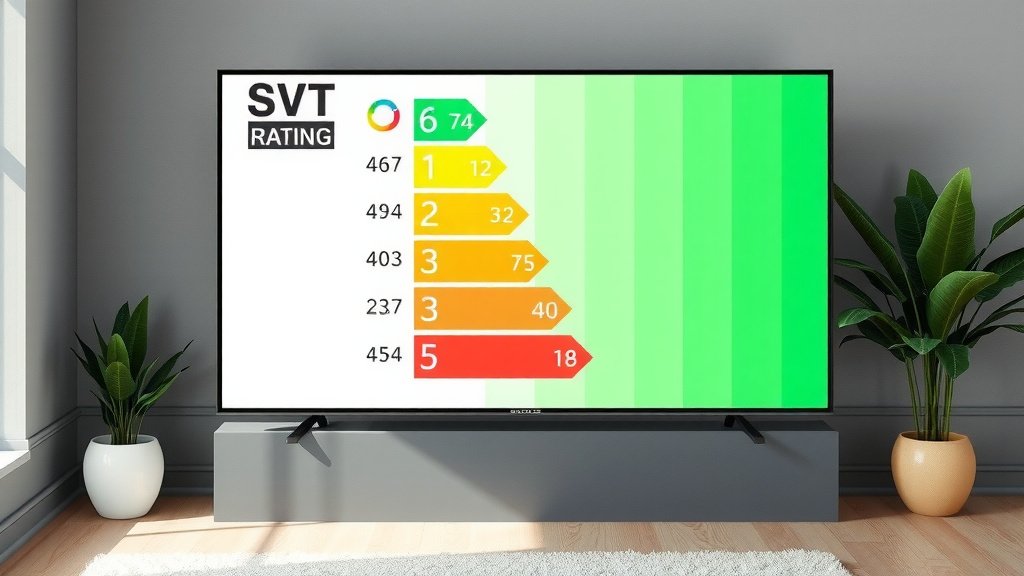
- Energy Efficiency Class: Often, there’s a scale that rates TVs from A (most efficient) to G (least efficient). Sometimes, newer labels use plus signs (like A+++) for even higher efficiency, though many modern systems are simplifying this.
- On-mode Power Consumption: This shows how much power the TV uses when it’s actually on and you’re watching something.
- Standby Power Consumption: This indicates how much power the TV uses when it’s off but still plugged in and drawing a small amount of electricity to allow for quick startup or remote control functions.
Consider this: if one TV shows an annual consumption of 100 kWh and another shows 200 kWh, that’s a direct cost difference you can calculate. If your electricity costs $0.15 per kWh, the first TV costs $15 per year to run, while the second costs $30. That’s a $15 saving each year just by choosing the more efficient option!
The Role of Screen Size and Technology
It’s natural to think bigger TVs use more energy. Generally, this is true. A larger screen needs more power to illuminate its pixels. However, technology plays a huge role. Newer LED and OLED screens are far more efficient than older plasma or LCD models. So, a new, large LED TV might actually use less power than a smaller, older LCD TV.
Manufacturers are constantly innovating. You’ll find that most new TVs on the market today are significantly more energy-efficient than models from even five years ago. So, if you’re upgrading an older TV, you’re likely to see a noticeable improvement in energy use.
Different Types of Energy Ratings You Might See
The specific format of energy ratings has evolved. You might encounter different labels depending on when and where the TV was manufactured or sold.
The EU Energy Label (Now Simplified)
For many years, the European Union had a very detailed energy label with classes going up to A+++. This was helpful but sometimes confusing with so many categories. More recently, the EU has simplified its labels to a scale from A to G, making it much easier to compare.
The new label clearly shows:
- The energy efficiency class (A-G).
- The energy consumption in kWh per 100 hours (for older models, it might be kWh/annum).
- The screen size and resolution.
- The HDR (High Dynamic Range) capability, as HDR can increase energy use.
This streamlined approach helps consumers quickly grasp the energy performance of appliances.
The ENERGY STAR® Program
In the United States and Canada, the ENERGY STAR® label is a widely recognized mark of energy efficiency. Products with the ENERGY STAR label meet strict energy efficiency guidelines set by the U.S. Environmental Protection Agency (EPA) and the U.S. Department of Energy.
When you see the ENERGY STAR logo on a TV, it means that model is at least 25% more energy-efficient than standard models. This program has been instrumental in driving down the energy consumption of electronics. Many experts agree that ENERGY STAR certified products offer a good balance of performance and efficiency.
Here’s a quick checklist to help you remember what to look for:
- Look for the ENERGY STAR® label in the US.
- Check the kWh/year or kWh/100 hours on the label.
- Compare efficiency classes (A-G, or A+++ on older labels).
- Note the on-mode and standby power consumption.
- Consider the screen size and technology type.
How to Maximize Your TV’s Energy Efficiency
Beyond choosing an efficient model, there are ways you can influence your TV’s energy use once you own it. It’s not just about the label; it’s about how you use it!
Settings Make a Difference
Most modern TVs come with a variety of picture modes. Modes like “Vivid” or “Dynamic” often crank up the brightness and contrast to make colors pop. While they look impressive, they also consume significantly more power. Research has found that switching to modes like “Standard,” “Cinema,” or “Eco” can reduce energy consumption without a drastic drop in picture quality.
You can also adjust the screen brightness manually. Lowering the brightness, especially in a dimly lit room, can save a good amount of energy. Many TVs also have a feature to automatically adjust brightness based on ambient light.
Manage Standby Power
While modern standby power is low, it still adds up. The easiest way to combat this is to unplug your TV when you’re not using it for extended periods, like on vacation. Some people also use smart power strips that cut power to the TV and its peripherals when the TV is turned off.
Some TVs have features like auto power-off after a period of inactivity or when no signal is detected. Enabling these settings can help prevent unnecessary energy use. It’s a small habit that contributes to overall savings and reduces phantom power drain.
Conclusion
Understanding your TV’s energy rating is a simple yet powerful way to save money and help the environment. You’ve learned that this rating, much like a nutrition label, shows you a TV’s electricity use. It helps you compare models and choose one that’s kinder to your wallet and the planet. Remember that newer technologies and smart settings can also make a big difference. Your next step is to look for these labels when you’re shopping for a new TV, or to check your current TV’s settings to optimize its efficiency. You have the knowledge to make a greener choice!
Frequently Asked Questions
What’s the difference between an old and new TV energy rating label?
Older TV energy rating labels often had many efficiency classes, like A+++. Newer labels, especially in regions like the EU, have simplified this to a clearer A-G scale. This makes comparing energy performance much more straightforward for you.
Does screen size really affect energy consumption?
Generally, yes, larger screens tend to use more energy because they require more power to light up. However, newer technologies like LED and OLED are much more efficient. So, a large new TV might use less energy than a smaller, older model.
Is standby power really a big deal?
While modern TVs use much less power in standby mode than older models, it does add up over time. If your TV is off but plugged in, it’s still drawing a small amount of electricity. You can combat this by unplugging it or using a smart power strip.
Do picture settings on my TV affect energy use?
Absolutely! Modes like “Vivid” or “Dynamic” often increase brightness and contrast, which uses more power. Switching to “Standard,” “Cinema,” or “Eco” modes, or manually lowering the screen brightness, can significantly reduce your TV’s energy consumption.
Is ENERGY STAR certification important for TVs?
Yes, the ENERGY STAR label is a great indicator of energy efficiency in the US and Canada. If a TV has this certification, it meets strict guidelines and is typically at least 25% more energy-efficient than standard models, offering you a good balance of performance and savings.