What Is A TV Subwoofer Output: A Complete Guide

A TV subwoofer output is a special connection on your TV or soundbar. It’s designed specifically to send low-frequency sound signals to an external subwoofer. This output is how your TV tells the subwoofer to produce those deep bass sounds you feel. Think of it as a dedicated highway for bass.
Without this dedicated output, your TV might struggle to send those powerful bass notes effectively. Using a subwoofer output helps create a much richer and more immersive audio experience. It’s key for enjoying movies and music with that full, booming sound. Many modern TVs and soundbars have this feature.
- A subwoofer output is a special TV port for bass.
- It sends low-frequency sound to a separate subwoofer.
- This creates deeper, more powerful bass for movies and music.
- It’s essential for a truly immersive home theater sound.
- Look for an RCA or specific “subwoofer out” port on your TV.
Below, we’ll break down exactly what a TV subwoofer output is and why you might want to use one for your home audio setup.
Understanding Your TV’s Subwoofer Connection
So, you’ve got a TV, and maybe you’re thinking about adding some serious boom to your sound. You might have heard the term “subwoofer output” tossed around. What exactly is this thing, and why should you care? Simply put, a TV subwoofer output is a dedicated port on your television or soundbar. Its sole purpose is to send low-frequency sound information – the deep bass you feel as much as hear – to an external subwoofer. It’s your TV’s way of saying, “Hey, bass unit, time to shine!”
Think of it like a dedicated express lane on a highway. Instead of all sound signals cramming together, the bass gets its own route. This means your TV can send those powerful rumble-y notes much more cleanly and effectively. Many modern TVs and soundbars include this handy feature. It’s a key ingredient for anyone wanting a truly cinematic audio experience at home. We’ll dig into why this connection is so important and how it works.
How Does a Subwoofer Output Work?
The magic of a subwoofer output lies in its specialization. Your TV processes audio in various frequencies. These range from the high-pitched whistles of a flute to the deep thrum of a movie explosion. A typical TV speaker tries to reproduce all of these. However, reproducing very low frequencies (bass) requires specialized drivers and amplification.
This is where the subwoofer comes in. It’s designed specifically for those deep sounds. The subwoofer output on your TV sends *only* the low-frequency audio signals. It bypasses your TV’s internal speakers for this bass information. Your soundbar or AV receiver then takes this dedicated bass signal and sends it to the subwoofer. The subwoofer then does its job, producing those satisfying, chest-rattling bass notes. It’s a focused approach that makes a big difference.
The RCA Connection: Your Bass Cable
Most often, you’ll find a subwoofer output on your TV or soundbar presented as an RCA jack. It’s usually a single, round port. This port is colored either black or red, though black is more common for subwoofer outputs. You’ll connect a standard RCA cable from this port to the corresponding “LFE” (Low-Frequency Effects) or “subwoofer in” port on your external subwoofer.
This RCA connection is pretty straightforward. It’s a simple plug-and-play setup for delivering that bass signal. We found that using this dedicated output is far superior to trying to split a regular audio signal. It ensures the cleanest possible bass delivery. You’ll want to make sure you have a good quality RCA cable to avoid any signal degradation.
Other Types of Subwoofer Connections
While RCA is the most common, some setups might use different connections. Some higher-end AV receivers might offer an HDMI ARC (Audio Return Channel) or eARC connection that can also carry subwoofer signals. This is more common when you have a separate AV receiver rather than just a TV with a built-in output.
You might also encounter wireless subwoofer connections. In this case, the TV or soundbar communicates wirelessly with the subwoofer. You won’t need a physical cable running from the TV to the subwoofer itself. However, there’s still an internal “subwoofer output” signal being generated by the TV or soundbar. It’s just being sent wirelessly instead of via a cable. This offers great flexibility in subwoofer placement.
Why You Need a Subwoofer Output for Better Sound
So, why go through the trouble of using a dedicated subwoofer output? The answer is simple: superior audio immersion. Your TV’s built-in speakers, while convenient, are usually small. They simply don’t have the physical capability to reproduce those deep, resonant bass frequencies effectively.
When you add a subwoofer via its dedicated output, you’re giving those low-frequency sounds the special attention they deserve. Explosions in movies feel more impactful. The beat in your favorite songs gains a palpable presence. The overall soundstage becomes much richer and more dynamic. It’s not just about loudness; it’s about depth and realism.
Enhancing the Movie Experience
Movies are often mixed with a wide range of sounds, including powerful bass effects. Think about the rumble of a passing train, the deep thud of a superhero landing, or the suspenseful low tones in a horror film. Without a subwoofer, you’re missing a huge part of the audio information. Your TV speakers might produce a muffled thud, but they won’t deliver the true impact.
Using a subwoofer output means your TV is sending those specific bass cues directly to the subwoofer. This allows for a much more engaging and thrilling viewing experience. You’ll feel the action, not just see and hear it. Many sound engineers mix movies with the expectation that a subwoofer will be present. They intentionally place these deep sounds in the mix, knowing a dedicated unit will reproduce them.
Boosting Your Music Playback
Music is also greatly improved by a dedicated subwoofer. Many genres, from electronic dance music and hip-hop to rock and even classical, rely on deep bass frequencies for their full effect. The kick drum in a rock song needs that punch. The bassline in a funk track needs to groove. The resonant notes of a pipe organ in a symphony require serious low-end power.
A subwoofer output ensures that your music reproduction is more accurate and impactful. It adds a physical dimension to the sound that smaller speakers can’t replicate. We found that even with a good set of bookshelf speakers, adding a subwoofer via the output creates a noticeably fuller sound. It fills out the sound spectrum beautifully.
Identifying the Subwoofer Output on Your TV
Locating the subwoofer output on your television might require a little detective work. It’s not always prominently labeled. First, unplug your TV from the power outlet for safety.
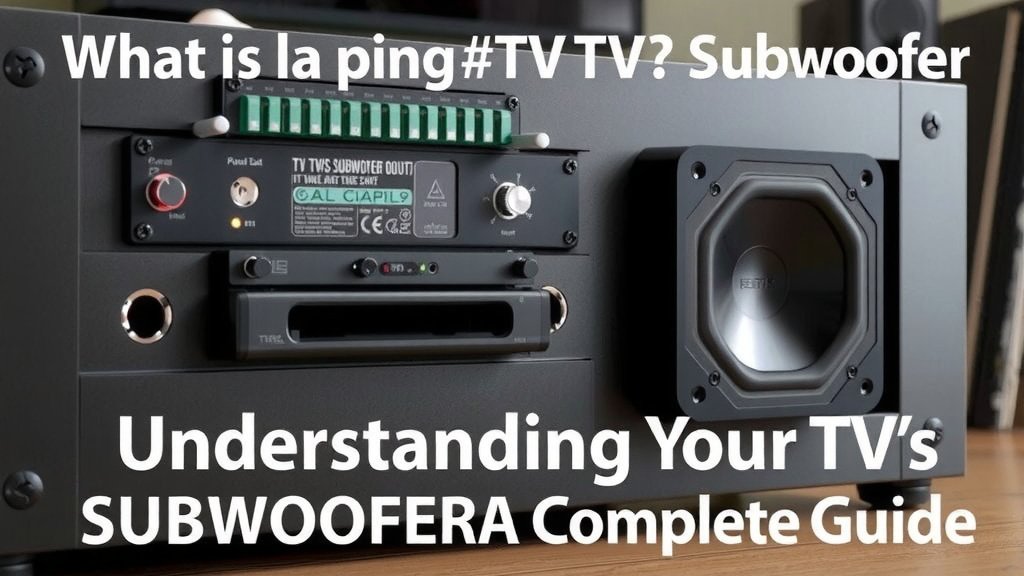
Then, carefully examine the ports on the back or side of your TV. Look for a round RCA jack, typically black or sometimes red. It will often be labeled.
- Look for labels like: “SUB OUT”, “SUBWOOFER OUT”, or sometimes just “LFE”.
- If it’s an RCA jack, it’s likely your subwoofer output.
- Check your TV’s manual if you’re unsure. It will clearly show all the available ports.
- Some newer TVs might use HDMI ARC/eARC, which can also carry subwoofer signals.
If your TV doesn’t have a dedicated subwoofer output, don’t despair. You might still be able to connect a subwoofer. However, it might require an adapter or a different type of connection, such as using the TV’s headphone jack (though this is not ideal for sound quality).
What If Your TV Lacks a Subwoofer Output?
It’s a common situation: you want that deep bass, but your TV doesn’t have a dedicated subwoofer port. What are your options? Several workarounds exist. You can often connect a subwoofer through a soundbar or an AV receiver, even if your TV doesn’t have the output itself. These devices are designed to handle and distribute audio signals, including bass, to a subwoofer.
Another method involves using an audio extractor if your TV outputs sound via HDMI. This device can pull out the audio signal, allowing you to send it to a soundbar or receiver with a subwoofer connection. Some subwoofers even have a “high-level” or “speaker-level” input. This lets you connect them directly to your TV’s main speaker outputs using speaker wire.
We found that while these methods work, they don’t offer the same pristine signal quality as a dedicated subwoofer output. The signal might not be as clean. However, for many users, they provide a significant upgrade over TV speakers alone. It’s about finding the best solution for your specific setup and budget.
Using a Soundbar as an Intermediary
Many soundbars come with a wireless subwoofer or have a port for one. If your TV has an HDMI ARC or Optical audio output, you can connect the soundbar to your TV using one of these. The soundbar then receives the audio. It processes the sound and sends the bass information to its dedicated subwoofer (or a subwoofer it’s paired with). This effectively bypasses the need for a direct subwoofer output on the TV itself.
This is a very popular and easy setup. It offers a significant audio improvement with minimal fuss. You get the benefit of a dedicated subwoofer without needing to hunt for a specific port on your TV. Many experts suggest this as a great starting point for anyone looking to improve their home theater sound.
The Role of AV Receivers
For the ultimate home theater experience, an AV receiver is often the heart of the system. AV receivers have dedicated subwoofer outputs (usually RCA or LFE). You connect your TV to the AV receiver via HDMI. The receiver then manages all the audio signals. It sends the appropriate frequencies to your TV speakers, surround speakers, and the subwoofer. This provides the most control and the highest fidelity. AV receivers are designed to expertly handle these audio divisions.
Key Takeaways for Your Setup
To wrap things up, understanding your TV’s subwoofer output is about getting the best possible sound. It’s the dedicated path for those deep, impactful bass notes. Here’s a quick checklist to ensure you’re set up for success:
- Identify the Port: Look for an RCA “SUB OUT” or similar label on your TV or soundbar.
- Get the Right Cable: Use a standard RCA cable to connect your TV output to your subwoofer’s input.
- Check Your Subwoofer: Ensure your subwoofer has an LFE or “subwoofer in” port.
- Consider Workarounds: If no output exists, explore soundbars, AV receivers, or audio extractors.
- Manual is Your Friend: Always consult your TV or soundbar manual for specific connection details.
- Test It Out: Play a movie or music with good bass to confirm everything is working.
By using a dedicated subwoofer output, you are unlocking a whole new level of audio realism. You’ll feel the thunderous roars of action scenes and the rich pulse of your favorite music. It’s a simple yet powerful upgrade for your home entertainment system. Enjoy that extra bit of rumble!
Conclusion
You’ve learned that a TV subwoofer output is your direct line to deeper, more impactful bass. It’s the key to making movie explosions rumble and music beats truly pulse. While most often an RCA jack, it ensures your subwoofer gets the cleanest low-frequency signal possible. If your TV lacks this port, don’t worry—soundbars and AV receivers offer excellent workarounds. Your next step is simple: check your TV’s rear panel for that “SUB OUT” port. If you find it, grab an RCA cable and a subwoofer to transform your home audio. You’re just one connection away from a richer, more immersive sound experience.
Frequently Asked Questions
What is an LFE port on a subwoofer?
An LFE (Low-Frequency Effects) port is essentially the input for a subwoofer designed to handle deep bass signals. It’s typically an RCA jack, just like your TV’s subwoofer output. Connecting your TV’s “SUB OUT” to your subwoofer’s “LFE in” port sends that dedicated bass signal directly where it needs to go.
Can I use a regular RCA cable for my subwoofer?
Yes, for most setups, a standard RCA cable is exactly what you need. You’ll connect one end to your TV or soundbar’s subwoofer output and the other end to your subwoofer’s LFE or input port. For the best performance, we suggest using a decent quality cable to avoid signal loss.
Will using a headphone jack for bass sound good?
While some people connect subwoofers using a TV’s headphone jack as a workaround, the sound quality won’t be ideal. The headphone output is designed for a wider range of frequencies and not optimized for the specific low-frequency signals a subwoofer needs. You’ll likely get a less powerful and less clear bass response.
What does “HDMI ARC” have to do with subwoofer outputs?
HDMI ARC (Audio Return Channel) allows audio to travel back from your TV to a soundbar or AV receiver. Many soundbars and receivers connected via HDMI ARC can then output that audio signal to a connected subwoofer. So, while your TV might not have a direct “SUB OUT” port, HDMI ARC can serve a similar function through another device.
How do I know if my TV has a subwoofer output?
You’ll need to physically check the back or side ports of your TV. Look for a single, round RCA connector, often black or red, that is clearly labeled “SUB OUT,” “SUBWOOFER OUT,” or sometimes “LFE.” If you can’t find a specific port, consult your TV’s user manual for a diagram of its connections.