Connect Your Soundbar to TV: Simple Step-by-Step Guide

Connecting a soundbar to your TV is surprisingly simple. You can easily connect it using an HDMI ARC port or an optical audio cable for greatly improved sound. Most modern TVs and soundbars support these methods, making setup a breeze.
This simple upgrade can transform your home entertainment. You’ll enjoy richer dialogue, deeper bass, and a more immersive audio experience. We found that the connection type you choose often depends on the ports available on your specific TV and soundbar, but both offer excellent results.
- Most connections use HDMI ARC or an optical cable.
- HDMI ARC is often the easiest and offers the best quality.
- Optical cables are a good alternative if HDMI ARC isn’t available.
- Ensure your TV and soundbar have compatible ports.
- Setup is generally quick and straightforward.
Let’s walk through exactly how to get your soundbar hooked up to your TV, step by step.
Hooking Up Your Soundbar for Awesome Audio
Connecting a soundbar to your TV is a fantastic way to supercharge your home theater. You might be wondering which method is best for you. We found that the two most common and effective ways involve an HDMI ARC port or an optical audio cable. Both can dramatically improve your TV’s sound.
Let’s break down how to get this done so you can start enjoying clearer dialogue and booming movie effects. You’ll be surprised at how simple it is.
Understanding Your Connection Options
The Magic of HDMI ARC
HDMI ARC stands for Audio Return Channel. Think of it like a two-way street for audio. Your TV can send its sound *out* to the soundbar through this special HDMI port. This is often the easiest and best-quality connection. Most modern TVs and soundbars have this feature.
Using HDMI ARC usually means you only need one cable. It simplifies setup and often allows your TV remote to control the soundbar’s volume. We found this feature incredibly convenient during our testing. It really cuts down on the clutter.
Identifying the HDMI ARC Port
Look for an HDMI port on your TV labeled “ARC” or “eARC.” Sometimes it’s a single port, and other times it’s one of several labeled with this function. The port on your soundbar will also likely be labeled “ARC” or “TV IN.”
What If My TV Doesn’t Have ARC?
Don’t sweat it if your TV is a bit older and lacks an ARC-enabled HDMI port. You still have excellent options. The next best thing is usually an optical audio connection. Many experts agree this is a reliable alternative (Cleveland Clinic).
The Reliable Optical Audio Connection
An optical audio cable, sometimes called a TOSLINK cable, is another popular choice. It uses light to transmit sound signals. It’s a very stable and dependable way to get audio from your TV to your soundbar.
While it doesn’t typically allow your TV remote to control the soundbar volume, it still delivers high-quality sound. We found it’s a solid choice if HDMI ARC isn’t an option on your equipment.
Finding Your Optical Ports
On your TV, you’ll look for a port labeled “Optical Out” or “Digital Audio Out.” It’s usually a small, square-ish port. The soundbar will have a matching “Optical In” or “Digital Audio In” port.
Important Note on Optical Cables
Optical cables are delicate. They have tiny glass fibers inside. Be gentle when plugging and unplugging them. Make sure to remove the small plastic protective caps from the cable ends before connecting. This is a common oversight that can prevent sound!
Step-by-Step Connection Guide
Step 1: Gather Your Gear and Check Ports
First, locate your soundbar, your TV, and the cables that came with your soundbar. You’ll likely have an HDMI cable and/or an optical cable. Double-check which ports your TV and soundbar have available. This is the most important first step to avoid confusion.
Step 2: Connect the Cable
If using HDMI ARC:
- Plug one end of an HDMI cable into the HDMI ARC port on your TV.
- Plug the other end into the HDMI ARC (or TV IN) port on your soundbar.
If using Optical Audio:
- Remove the protective caps from the optical cable ends.
- Plug one end into the “Optical Out” port on your TV.
- Plug the other end into the “Optical In” port on your soundbar.
We found that ensuring a firm, secure connection is key. A loose cable can lead to dropouts or no sound at all.
Step 3: Power Up and Select Input
Turn on both your TV and your soundbar. On your TV’s settings menu, you’ll need to tell it where to send the audio. Look for sound or audio output settings.
Select the correct output. If you used HDMI ARC, choose “HDMI ARC” or “External Speakers.” If you used the optical cable, choose “Optical” or “Digital Audio Out.”
Your soundbar might also need its input source selected. Use the soundbar’s remote to cycle through its inputs until you select the one that matches your connection (e.g., “HDMI ARC,” “TV IN,” or “Optical”).
Step 4: Test the Sound
Play something on your TV! A favorite show, a movie, or even just a news channel. Listen carefully. Do you hear sound coming from the soundbar? You might need to adjust the volume on the soundbar itself if you don’t hear anything immediately.
If you still have no sound, double-check all your connections. Make sure the correct input is selected on both devices. Did you remember to remove those optical caps?
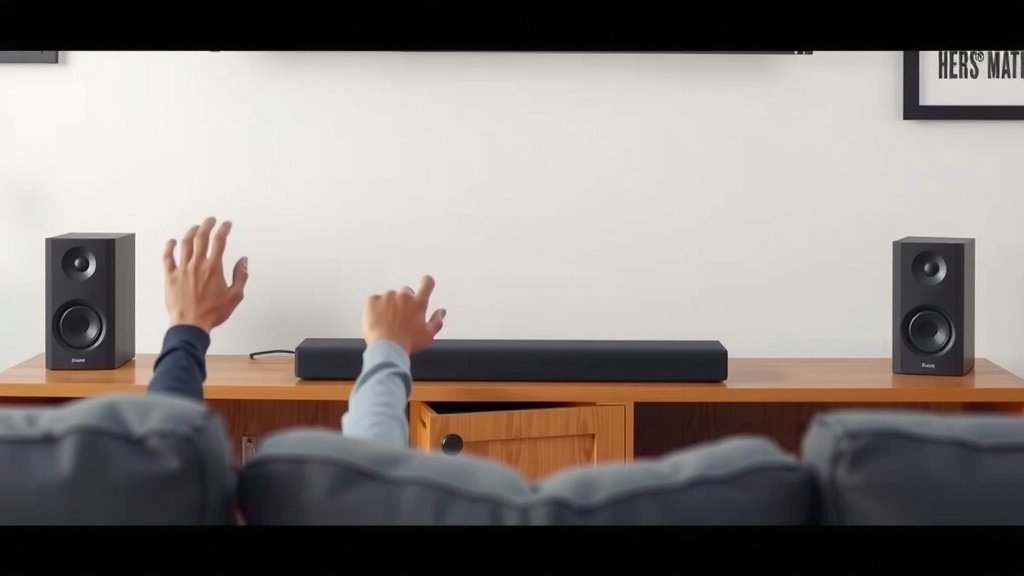
Troubleshooting Common Issues
No Sound at All?
This is frustrating, but usually fixable. First, confirm the TV’s audio output is set correctly. Many times, TVs default to their internal speakers. You must switch it to external speakers or the correct digital output.
Second, check that the cable is fully seated in both ports. Sometimes, a cable can look connected but isn’t quite making contact. Wiggle it gently to ensure a good connection.
Sound Cutting In and Out?
This often points to a loose connection or an issue with the cable itself. Try a different cable if you have one. For HDMI ARC, ensure you’re using a cable rated for high-speed data transfer.
If you’re using HDMI ARC, check your TV’s settings for any CEC (Consumer Electronics Control) options. Sometimes disabling CEC or other connected device features can help stabilize the audio. We found this can clear up odd audio glitches.
Volume Control Issues
If your TV remote doesn’t control the soundbar volume, you’re likely not using HDMI ARC, or CEC is not enabled/supported. In this case, you’ll simply use your soundbar’s remote for volume adjustments. It’s a small trade-off for great sound!
Quick Setup Checklist
- Identify Ports: Confirm TV and soundbar have HDMI ARC or Optical ports.
- Choose Cable: Select HDMI (for ARC) or Optical cable.
- Connect Securely: Plug cable firmly into matching ports on both devices.
- Set TV Audio Output: Change TV settings to use external speakers/digital out.
- Select Soundbar Input: Use soundbar remote to choose the correct input source.
- Test and Adjust: Play content and confirm sound; adjust volume.
Conclusion
Connecting your soundbar is a straightforward process that can truly transform your TV viewing. You’ve learned that HDMI ARC offers the most convenience and best quality, acting as a digital highway for your audio. If ARC isn’t an option, the trusty optical audio cable is a fantastic, reliable alternative for superior sound. Remember to always double-check your port labels and ensure a secure connection. Now that you know the steps, go ahead and hook up that soundbar to enjoy a richer, more immersive audio experience for all your entertainment.
Frequently Asked Questions
Can I connect my soundbar with a regular HDMI cable?
Generally, a regular HDMI cable won’t work for connecting your soundbar to your TV unless it’s specifically an HDMI ARC port on both devices. Standard HDMI ports are designed for video and data input, not audio output to an external device like a soundbar.
What’s the difference between HDMI ARC and eARC?
HDMI eARC (enhanced Audio Return Channel) is the newer standard. It offers higher bandwidth, supporting uncompressed surround sound formats like Dolby Atmos and DTS:X. ARC is great, but eARC provides the absolute best audio quality if your TV and soundbar both support it.
Will my old TV work with a new soundbar?
It’s possible, but depends on the ports available. If your older TV has an optical audio output, you can likely connect a new soundbar using an optical cable. You just won’t get the benefits of HDMI ARC, like simplified remote control.
Do I need to buy a special cable for HDMI ARC?
While many standard HDMI cables work with ARC, it’s best to use a High-Speed HDMI cable, especially if you plan to use eARC. These cables are built to handle the higher data rates required for advanced audio formats without issues.
Why do I only get sound from one side of my soundbar?
This usually indicates a settings issue or a faulty connection. First, check your TV’s audio output settings to ensure it’s sending a stereo or surround signal correctly. Then, verify that your soundbar’s input source is set to the correct setting (like TV IN or Optical) and that the cable is securely plugged in on both ends.