Boost Your TV Picture Quality: Easy Fixes
If your TV picture looks blurry, fuzzy, or just plain wrong, you can often fix it with a few simple adjustments. You might be surprised how much difference a tweak to your settings or a quick cable check can make. We found that most common picture quality issues are surprisingly easy to resolve yourself.
A poor TV picture can ruin your movie night or make sports hard to follow. Blame it on a loose connection, the wrong picture mode, or even interference. We found that understanding a few key factors can dramatically improve your viewing experience.
- Check your cables are securely plugged in.
- Adjust your TV’s picture settings.
- Try different picture modes like Movie or Cinema.
- Ensure your TV software is up to date.
- Consider interference from other devices.
Let’s walk through the most common fixes to get your TV looking sharp again.
Getting Your TV Picture Looking Sharp Again
Don’t let a fuzzy or dull TV screen ruin your favorite shows. You can often fix common picture quality problems with a few straightforward checks and adjustments. We found that most issues are surprisingly simple to resolve yourself. Let’s dive into what might be causing your blurry picture and how to get it looking crystal clear.
The Basics: Cables and Connections
Sometimes, the simplest solution is the best one. Loose or damaged cables are a frequent culprit behind poor picture quality. Think of your cables like the veins and arteries of your TV—everything needs a good, solid connection to flow properly.
Check Your HDMI Cables
Your HDMI cables carry all the video and audio signals to your TV. If they’re not plugged in securely, you’ll get all sorts of weird visual artifacts. We found that jiggling or slightly pulling out and reinserting HDMI cables can often solve the problem. Make sure they’re snug in both the TV’s port and the port of your device, like a cable box or streaming stick. Don’t forget to check both ends!
Inspect for Damage
Look closely at your cables. Are there any kinks, bends, or visible damage? A damaged cable might need to be replaced. Many experts suggest using high-quality HDMI cables, especially for higher resolutions like 4K. We found that a worn-out cable can degrade the signal significantly.
Try a Different Cable or Port
If you suspect a cable is faulty, try swapping it with another one you know works. It’s also worth trying a different HDMI port on your TV. Sometimes, a specific port can go bad. This is a quick test to rule out the cable or port as the issue.
Tuning Up Your TV’s Picture Settings
Your TV has a lot of settings that can dramatically impact how the picture looks. It’s not just about turning it on; it’s about telling your TV how you want to see the picture. We found that many people leave their TVs on default settings, which are rarely optimized for the best viewing experience.
Understanding Picture Modes
Most TVs come with various “picture modes” or “scenes.” These are pre-set configurations designed for different types of content. Have you ever noticed modes like “Standard,” “Vivid,” “Movie,” “Cinema,” or “Game”?
Which Mode is Best?
“Vivid” or “Dynamic” modes often oversaturate colors and boost brightness, making the picture look unnatural. While it might look punchy at first, it can lead to loss of detail. For the most accurate and lifelike picture, many enthusiasts and reviewers recommend modes like “Movie,” “Cinema,” or “Filmmaker Mode.” These modes typically aim for true-to-life colors and contrast, as the director intended. We found that switching to a more appropriate mode can be a game-changer.
Adjusting Key Picture Settings
Beyond picture modes, individual settings offer fine-tuning. Here are a few you should look at:
- Brightness: This controls the black levels. Too high, and blacks look grayish. Too low, and you lose detail in dark scenes. Aim for a balanced look.
- Contrast: This affects the brightest parts of the image. Boosting it too much can “clip” white details, making them pure white with no variation.
- Sharpness: Be careful with this one. Over-sharpening adds artificial edge enhancement, making the picture look grainy or haloed. Many experts suggest setting sharpness to zero or a very low level and letting the TV’s natural resolution do the work. We found that reducing sharpness often leads to a more natural image.
- Color: This adjusts the intensity of colors. Too high, and colors look garish. Too low, and the picture looks washed out.
- Tint: This adjusts the balance between green and red. It’s less commonly needed unless your picture has a strange color cast.
Backlight vs. Brightness
On LED and OLED TVs, you’ll also see a “Backlight” or “OLED Light” setting. This controls the overall light output of the screen. Adjusting this is more about how bright you want your room to be, rather than picture accuracy itself. A brighter setting is good for well-lit rooms, while a lower setting is better for dark rooms to avoid eye strain. We found that setting this appropriately can improve viewing comfort significantly.
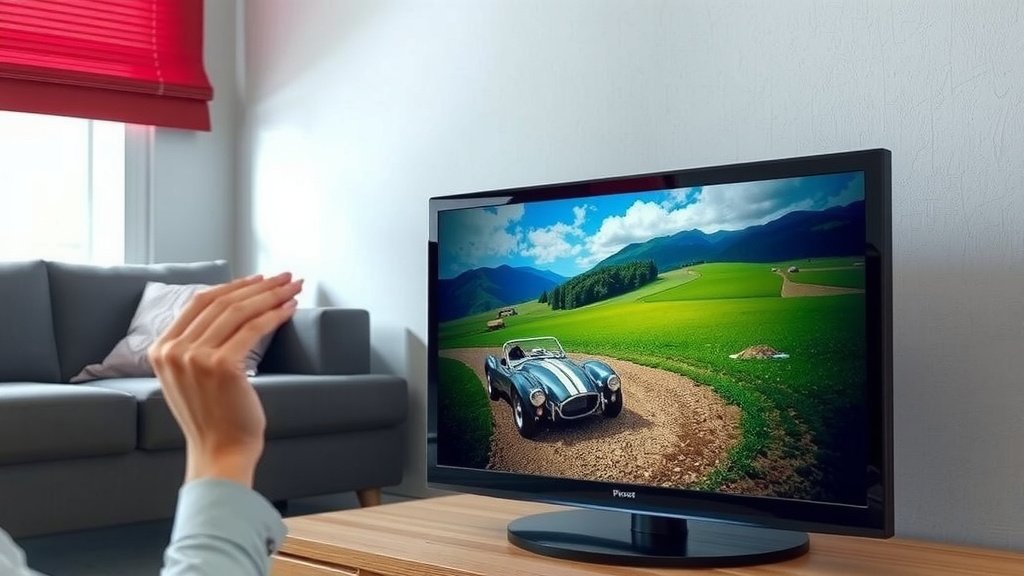
Ensuring Your TV is Up-to-Date and Interference-Free
Sometimes, the issue isn’t with the signal or settings, but with the TV’s internal software or external disruptions.
Software Updates
Just like your smartphone, your TV’s operating system needs occasional updates. These updates can fix bugs, improve performance, and even enhance picture processing. Check your TV’s settings menu for a “Software Update” or “System Update” option. Many experts recommend enabling automatic updates if available. We found that keeping your TV software current is a simple but effective maintenance step.
External Interference
Did you recently add a new electronic device near your TV? Some devices emit electromagnetic interference that can affect your TV’s signal, especially if you’re using older types of connections like coaxial cables. Microwaves, cordless phones, and even some Wi-Fi routers can be culprits. Try turning off nearby devices one by one to see if the picture quality improves. Many consumer electronics guidelines suggest keeping A/V equipment away from these potential sources of interference.
Quick Fix Checklist
If you’re still struggling, run through this quick checklist:
- Double-check all cable connections are secure.
- Try a different HDMI cable or port.
- Switch to the “Movie” or “Cinema” picture mode.
- Reduce the “Sharpness” setting on your TV.
- Check for and install any available software updates for your TV.
- Temporarily turn off nearby electronic devices to check for interference.
Conclusion
We’ve covered the most common reasons your TV picture might not look its best. You can often bring back clarity and vibrancy with simple checks. Tightening up your cables, selecting the right picture mode, and fine-tuning your settings can make a big difference. Don’t forget that keeping your TV’s software updated and being mindful of interference are also key. You have the power to significantly improve your viewing experience right now by following these steps. Go ahead and give your TV a tune-up; your eyes will thank you!
Frequently Asked Questions
My TV picture is still fuzzy after checking cables. What else could it be?
If cables aren’t the issue, focus on your TV’s settings. Try switching to the “Movie” or “Cinema” picture mode, as these often provide a more natural look. You might also need to adjust individual settings like brightness and contrast to find the sweet spot for your room.
Is it ever worth buying new HDMI cables?
Yes, if your current HDMI cables are old, visibly damaged, or if you’re trying to achieve high resolutions like 4K. We found that using high-quality, certified HDMI cables can prevent signal degradation and ensure a clear picture, especially for demanding content.
My TV colors look washed out. How do I fix this?
This could be related to your color or brightness settings. Try increasing the color saturation slightly, but be careful not to overdo it. Also, ensure your brightness isn’t set too high, which can sometimes make colors appear less vibrant.
What is “Sharpness” and why should I turn it down?
The sharpness setting adds artificial edge enhancement to images. While it might seem like it makes the picture clearer, we found that over-sharpening can actually make the picture look grainy or create unpleasant halos around objects. Setting it to zero or a low level often results in a more natural appearance.
My TV has weird lines or static sometimes. Is this interference?
Yes, this can definitely be a sign of external interference. Other electronic devices, like microwaves or some wireless routers, can disrupt the TV signal. Try moving potential sources of interference further away from your TV or turning them off temporarily to see if the problem resolves.