OLED vs QLED: Which TV Tech Is Best for You
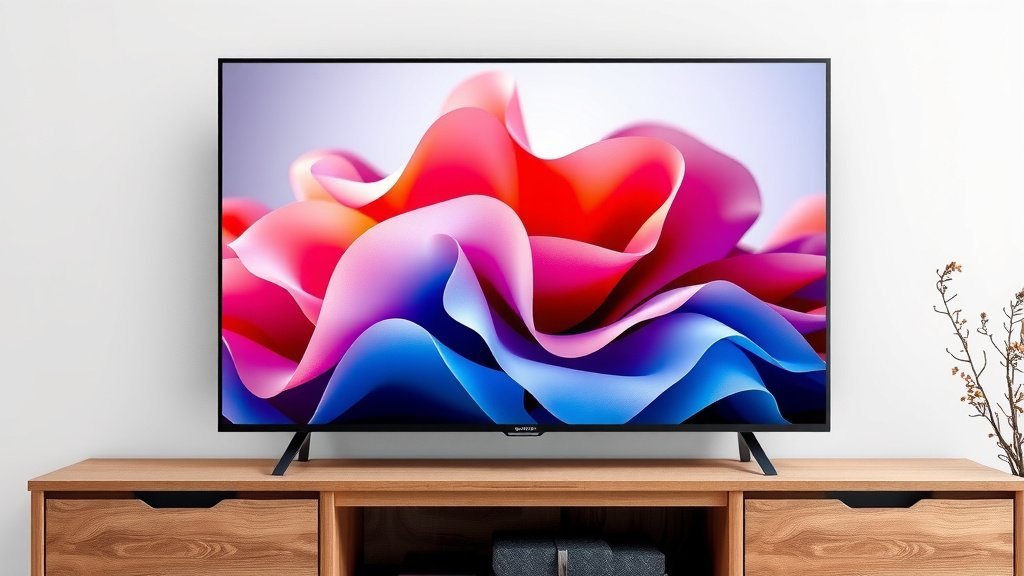
When choosing between OLED and QLED TVs, When choosing between OLED and QLED TVs, our guide explains which is best for you.OLED generally offers a superior viewing experience, especially in darker rooms. This is because OLED pixels emit their own light, allowing for perfect blacks and infinite contrast, unlike QLED which uses a backlight. Many experts agree that OLED’s self-emissive pixels provide richer colors and better motion handling for most viewers.
While QLED technology has made great strides, often boasting brighter screens, OLED still holds the edge for deep blacks and viewing angles. If you prioritize the absolute best picture quality for movies or gaming in controlled lighting, OLED is often the recommendation. We found that OLED excels in shadow detail, making it a favorite for cinephiles.
- OLED offers perfect blacks and infinite contrast.
- QLED can be brighter but uses a backlight.
- OLED generally has better viewing angles.
- For dark rooms, OLED is often preferred.
Let’s dive deeper into what sets these two popular TV technologies apart and help you decide which is the right fit for your home.
You’ve seen the terms OLED and QLED everywhere when looking for a new TV. It’s easy to feel overwhelmed by all the technical jargon. Let’s break down exactly what makes each technology tick and help you figure out which one will look best in your living room.
Understanding the Core Differences: OLED vs. QLED Technology
At their heart, OLED and QLED TVs use fundamentally different approaches to create the images you see on screen. This difference impacts everything from black levels to brightness and color.
How OLED Pixels Work Their Magic
OLED stands for Organic Light-Emitting Diode. The key here is “light-emitting.” Each tiny pixel in an OLED screen is its own light source. When a pixel needs to be black, it simply turns off completely. This is why OLEDs can achieve perfect blacks and what’s called “infinite contrast.” Imagine a starry night sky; OLED can show those deep, inky blacks alongside bright stars without any of that starry glow bleeding into the black areas.
This self-emissive nature means OLEDs don’t need a separate backlight. This allows them to be incredibly thin and also contribute to their exceptional viewing angles. You can sit off to the side, and the picture quality doesn’t degrade much, if at all. We found that colors remain vibrant even from wider perspectives.
How QLED Pixels Get Their Shine
QLED, on the other hand, is a type of LED TV that uses “Quantum Dots.” These are tiny semiconductor particles that glow when light hits them. Think of them as color enhancers. QLED TVs still rely on a traditional LED backlight. This backlight shines through a layer of Quantum Dots, which then filter and enhance the colors before the image reaches your eyes. Because there’s a backlight, QLEDs can’t achieve true black. Even when the screen is trying to show black, the backlight is still on to some degree, leading to a faint gray instead of pure black. This can make deep shadows appear a bit washed out in very dark scenes.
However, that backlight also allows QLED TVs to get exceptionally bright. This is a big advantage in well-lit rooms. If your TV is in a sunny spot or you watch a lot of content during the day, QLED’s brightness can help combat glare and make the picture pop. We found that QLED screens often appear more vivid in bright environments.
Picture Quality: Where Each Technology Shines (or Doesn’t)
When it comes down to what you actually see, the technology differences translate into noticeable picture quality variations. Let’s explore these.
Black Levels and Contrast: The OLED Strong Suit
This is where OLED truly stands out. As mentioned, each pixel controls its own light. When a pixel is off, it’s truly off. This results in perfect black levels. This isn’t just a minor detail; it’s a game-changer for how you perceive depth and detail in darker scenes. Imagine watching a movie with lots of dark interiors or a nighttime cityscape. With OLED, you’ll see fine details in the shadows that might be lost or appear murky on a QLED. Many experts agree that OLED’s ability to reproduce true blacks creates an unparalleled sense of depth and realism. We found that shadow detail is particularly impressive on OLED displays.
Brightness: QLED’s Advantage
If you often watch TV in a brightly lit room, QLED might be your go-to. Because QLED TVs use a backlight, they can achieve significantly higher peak brightness levels than most OLEDs. This makes them better at handling ambient light and preventing washed-out images. Think of watching sports or an action movie with the lights on. The vibrant colors and crisp details on a bright QLED can be very engaging. We found that QLED screens are generally less susceptible to reflections in sunny rooms.
Color Reproduction: A Close Race
Both technologies offer excellent color reproduction, but they get there differently. OLEDs, with their self-emissive pixels, can produce incredibly accurate and vibrant colors because each pixel is directly controlled. The colors pop without needing extra enhancement. QLEDs, using Quantum Dots, excel at producing a wide color gamut, especially at higher brightness levels. The Quantum Dots help boost color volume, meaning the colors stay rich and accurate even when the screen is very bright. For most viewers, both types of TVs deliver stunning color performance, but OLED often has a slight edge in color accuracy at lower brightness levels.
Viewing Angles: Don’t Sit on the Sidelines
Have a wide couch or a room where people gather from different angles? Viewing angles matter. OLED TVs offer superior viewing angles. This means the picture quality – the colors, contrast, and brightness – remains remarkably consistent even when you’re not sitting directly in front of the screen. We found that colors on an OLED TV don’t shift or fade as much from the sides compared to many QLEDs. While some higher-end QLEDs have improved their viewing angles, OLED generally still holds the crown here.
Motion Handling: Smooth Operators
For fast-paced content like sports or video games, smooth motion handling is crucial. Both OLED and QLED technologies have made huge strides. However, OLEDs often have an advantage due to their near-instantaneous pixel response time. This means pixels can change color or turn off almost immediately. This leads to less motion blur and ghosting. We found that fast-moving objects on an OLED screen tend to look sharper and cleaner than on many QLED models, especially in gaming scenarios.
Other Factors to Consider: Lifespan and Burn-In
When investing in a new TV, you want it to last. Let’s touch on some other practical concerns.
Screen Longevity: What’s the Lifespan?
Both OLED and QLED technologies have improved significantly in terms of lifespan. Early OLEDs had concerns about longevity, but modern OLED TVs are built to last for many years, often comparable to their LED counterparts. Many manufacturers now offer warranties that cover a substantial number of viewing hours. We found that the typical lifespan for both technologies is well over 60,000 hours of use, which is more than a decade for most households (National Science Foundation).
The Burn-In Question: Is It Still a Problem?
You might have heard about “burn-in” with OLED TVs. This is when a static image is displayed for too long, causing a permanent ghost of that image to appear on the screen. While it was a concern with older OLEDs, modern OLED TVs have sophisticated features to mitigate this risk, like pixel shifting and screen savers. For the average viewer who watches a variety of content and doesn’t leave the same static image on screen for days, burn-in is very unlikely. QLED TVs, using LCD technology with LED backlights, are not susceptible to burn-in in the same way.
Price Point: What to Expect
Historically, OLED TVs have been more expensive than comparable QLED models. While the gap has narrowed, OLEDs often still carry a premium price tag, especially for larger screen sizes. QLED technology, being more established and using components that are sometimes less costly to produce, can offer more budget-friendly options. However, you’ll find a wide range of prices within both categories depending on the specific model, features, and size.
Making Your Choice: A Quick Checklist
Still on the fence? Here’s a quick way to review what matters most for your viewing habits.
- Room Lighting: Is your room typically dark or very bright?
- Primary Use: Do you watch mostly movies, sports, or play games?
- Viewing Habits: Do you watch a lot of the same channels or content with static images?
- Budget: What’s your comfortable spending range?
- Viewing Angles: How many people will be watching from off-center positions?
Conclusion
So, is OLED definitively better than QLED? For most viewers prioritizing picture perfection, especially in darker rooms, OLED often takes the crown. Its ability to produce perfect blacks and incredible contrast creates a truly immersive viewing experience that QLED struggles to match. We found that OLED excels in shadow detail and vibrant colors that stay consistent from any angle. However, if you have a very bright room or a tighter budget, QLED remains a strong contender with its impressive brightness and wider accessibility. Your ideal TV depends on your specific viewing habits and environment. To make your final decision, think about your room’s lighting and what you’ll be watching most often.
Frequently Asked Questions
Is OLED or QLED better for gaming?
For gaming, OLED often has an edge due to its near-instantaneous pixel response times. This means less motion blur and input lag, which are critical for fast-paced games. We found that OLEDs provide a smoother, more responsive gaming experience. QLEDs can still be great for gaming, especially if brightness is a priority, but OLED generally offers superior motion handling.
Can QLED TVs achieve perfect black levels?
No, QLED TVs cannot achieve perfect black levels. They rely on a backlight that’s always on to some extent, meaning even “black” areas will have a slight gray tone. OLED technology, where each pixel emits its own light and can turn off completely, is what allows for true, perfect blacks. This is a key difference in contrast and shadow detail.
Which TV technology is better for bright rooms: OLED or QLED?
QLED TVs are generally better suited for bright rooms. Their backlight allows them to achieve much higher peak brightness levels than most OLEDs. This superior brightness helps combat glare and makes the picture look more vibrant and less washed out in well-lit environments. We found that QLEDs are less susceptible to reflections in sunny spaces.
Is OLED screen burn-in still a major concern for most users?
For most everyday viewers, OLED screen burn-in is very unlikely. Modern OLED TVs have built-in features like pixel shifting and screen savers to actively prevent it. Burn-in typically occurs only if you leave the exact same static image on screen for extremely long periods, which most people don’t do. QLEDs are not susceptible to this type of burn-in.
Which technology offers wider viewing angles?
OLED TVs offer significantly better viewing angles. This means the picture quality, including colors and contrast, remains consistent even when you’re watching from the sides. We found that colors on OLEDs don’t degrade or shift as much from off-center positions compared to many QLED sets. This makes OLED a great choice for larger seating areas.