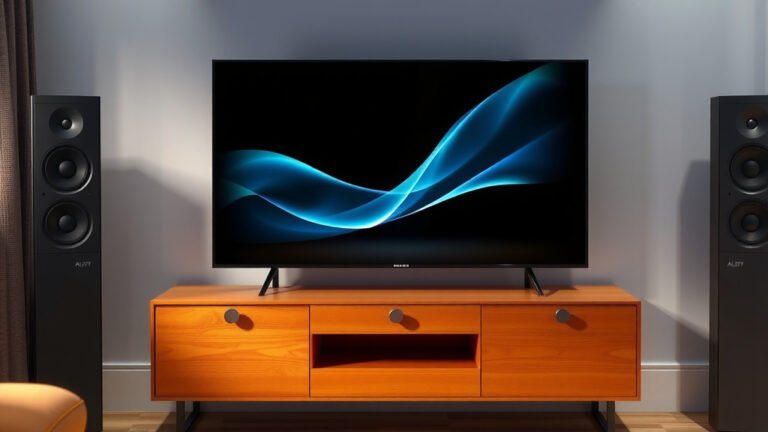
What Is a Flat TV? Your Complete Guide

A flat TV is a television display that is thin and lightweight. Unlike older bulky cathode ray tube (CRT) TVs, flat panel displays have a flat screen. This allows them to be mounted on walls or placed on stands. They offer much better picture quality and a more immersive viewing experience.
You’ve probably seen them everywhere, from living rooms to sports bars. Flat TVs use technologies like LCD, LED, OLED, and Plasma. These modern screens are a big upgrade from the boxy TVs of the past. They save space and look much sleeker in your home.
- Flat TVs are thin and lightweight televisions.
- They use modern screen technologies like LCD, LED, and OLED.
- Their flat design allows for wall mounting.
- They offer superior picture quality compared to older TVs.
- Flat TVs are the standard for home entertainment today.
If you’re wondering what makes these modern marvels tick, we’ve got you covered. Let’s walk through exactly what a flat TV is and why it changed home entertainment forever.
Understanding the Modern Flat Screen TV
So, what exactly makes a television a “flat TV”? The core idea is simple: it’s a TV with a flat display panel. This is a huge departure from the old, bulky televisions that looked like big boxes. Those older TVs used cathode ray tubes (CRTs) to create the image. These tubes are deep and heavy, requiring a large cabinet to house them. Flat TVs, on the other hand, have a much thinner profile. They are designed to be sleek and space-saving. This flat design is their defining characteristic.
The Evolution from Bulky to Slim
Think back to the TVs you might have seen at your grandparents’ house. They were often deep and wide, taking up a significant amount of floor or furniture space. The technology inside, the CRT, was essentially a vacuum tube that shot beams of electrons onto a phosphor-coated screen. This required a lot of depth and heavy components. When flat-panel technology emerged, it was revolutionary. It allowed for televisions that could be hung on a wall, freeing up living space. This shift completely changed how we integrate TVs into our homes.
Key Technologies Behind Flat TVs
Flat TVs aren’t just one type of technology; they use several different methods to display images. Each has its own way of creating those bright, colorful pictures you see. Understanding these can help you appreciate the innovation. We’ve seen advancements over the years that continue to improve picture quality. Let’s look at the main types you’ll encounter.
LCD (Liquid Crystal Display)
LCD TVs were among the first major players in the flat-screen revolution. They use a backlight, usually made of CCFL (cold cathode fluorescent lamps) or LEDs, to illuminate liquid crystals. These crystals act like tiny shutters. They can twist to block or allow light to pass through. A color filter then adds the red, green, and blue hues to create the final image. The quality can vary, but they offered a significant upgrade in clarity over older models. Many TVs that are now called “LED TVs” are actually a type of LCD TV using LED backlights.
LED (Light Emitting Diode)
As mentioned, LED TVs are often a type of LCD TV. The key difference is the backlighting technology. Instead of fluorescent lamps, they use LEDs. This allows for thinner panels and better control over brightness. Some LED TVs use “edge lighting,” where LEDs are placed along the edges of the screen. Others use “full-array” or “direct-lit” backlighting, with LEDs spread across the entire back of the panel. Full-array backlighting often provides better contrast and black levels. We found that this distinction can greatly impact the picture quality you experience.
OLED (Organic Light Emitting Diode)
OLED technology is quite different and offers some of the best picture quality available today. With OLED, each individual pixel is an organic light-emitting diode. This means each pixel can turn on or off by itself. When a pixel is “off,” it produces a perfect black. This allows for incredible contrast ratios and deep, rich colors. Because there’s no backlight to bleed through, you get stunning image depth. Many experts point to OLED as offering the most lifelike picture (Cleveland Clinic).
Plasma (Largely Discontinued but Historically Important)
While you won’t find many new plasma TVs today, they were a significant step in flat-screen technology. Plasma TVs used tiny cells filled with noble gases. When an electrical current passed through these gases, they created plasma, which then emitted light. Plasma panels were known for their excellent motion handling and deep blacks. However, they were often heavier and consumed more power than LCDs. Many manufacturers have stopped producing them, favoring LCD and OLED technologies.
The Advantages of Owning a Flat TV
Why did flat TVs become so popular so quickly? It’s not just about looking modern. There are practical benefits that make them a superior choice for most people. Let’s break down why so many households have made the switch.
Space Saving Design
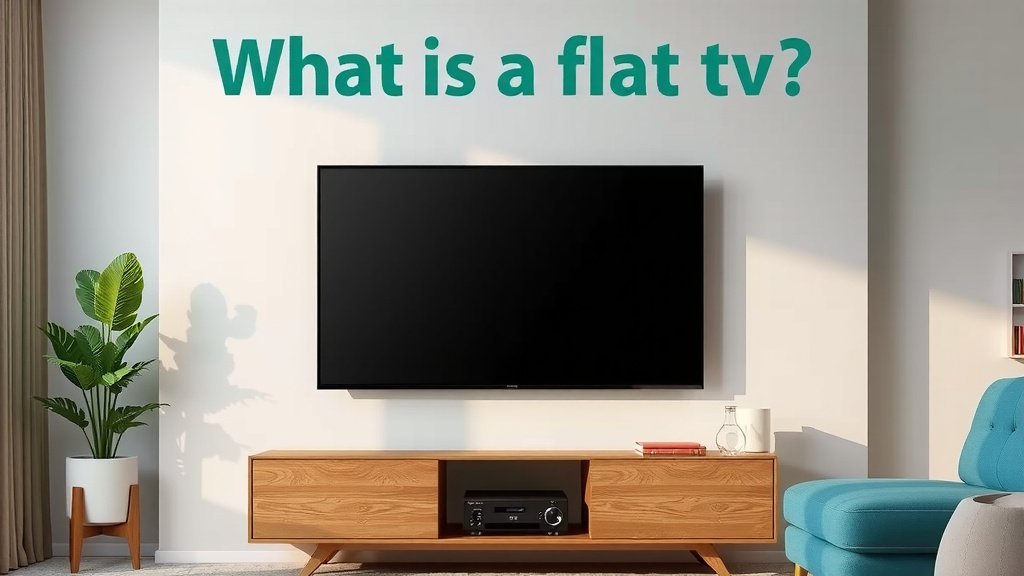
This is perhaps the most obvious benefit. Unlike their bulky predecessors, flat TVs are incredibly slim. This means they take up much less physical space. You can mount them on a wall like a piece of art, which is a fantastic way to save floor space in smaller rooms. Even when placed on a stand, their slender profile looks far more elegant than a deep CRT. We found that the ability to wall-mount a TV opened up a whole new world of interior design possibilities.
Superior Picture Quality
Flat-panel technology allows for much higher resolutions and better color reproduction. You’ll experience sharper images, more vibrant colors, and deeper contrasts. The advancements in technologies like LED and OLED have pushed picture quality to new heights. You’ll notice finer details in movies and games. Sports will look more immersive. We found that the leap in clarity from older TVs to modern flat screens is truly dramatic.
Versatile Placement Options
Because they are so thin and lightweight, flat TVs offer incredible flexibility. You can place them on a media console, a bookshelf, or even mount them in a kitchen or bedroom. Their lighter weight makes them easier to move if you decide to redecorate. Many people enjoy the ability to tilt or swivel their TV on its stand for the best viewing angle. This adaptability is a major selling point.
Energy Efficiency
Generally, flat-screen TVs are more energy-efficient than older CRT models. Technologies like LED backlighting, in particular, use less power. While very large screens and certain technologies (like older plasma) can still consume a good amount of electricity, the trend has been towards greater efficiency over time. Consuming less energy is good for your electricity bill and for the environment. Some guidelines suggest checking the Energy Star rating for the most efficient models (Energy Star).
Making Your Choice: What to Consider
Now that you know what a flat TV is and why it’s so great, you might be thinking about getting one. There are a few things to keep in mind when you’re looking. It’s not just about size; the technology matters too. Think about where you’ll put it and what you’ll use it for most often.
Here’s a quick checklist to help you:- What is the primary room the TV will be in?
- What is your budget for the TV?
- What screen size would fit best?
- Which picture technology (LED, OLED, etc.) interests you most?
- How important are smart TV features (apps, streaming)?
Conclusion
You now understand what makes a TV a flat TV. It’s all about that slim design and the modern display technologies like LCD, LED, and OLED that power them. We’ve seen how they transformed our living spaces, offering superior picture quality and much more versatile placement options than the old boxy sets. Whether you’re mounting it on the wall or setting it on a stand, your flat TV is the centerpiece of modern home entertainment. Your next step? Consider your viewing habits and room setup to choose the perfect flat TV that fits your life and budget.
Frequently Asked Questions
Are all thin TVs considered flat TVs?
Yes, generally speaking, if a TV is thin and has a flat screen, it falls under the umbrella term “flat TV.” This distinguishes them from the older, deep CRT televisions. Their defining feature is their slim profile, regardless of the specific display technology.
What’s the main difference between LED and OLED TVs?
The core difference lies in how they produce light. LED TVs are a type of LCD that uses LEDs for backlighting. OLED TVs, on the other hand, have pixels that emit their own light, allowing for perfect blacks and incredible contrast. We found OLED offers a more lifelike picture.
Can flat TVs really save a lot of space?
Absolutely. Their thin design means they take up significantly less physical space than older TVs. You can wall-mount them, freeing up floor space. Even on a stand, their slim profile looks much cleaner and more modern in your room.
Is it difficult to set up a flat TV?
Setting up most flat TVs is quite straightforward. They often come with simple stand assembly or clear instructions for wall mounting. Connecting your devices like gaming consoles or streaming sticks is usually done through easily accessible ports.
Are flat TVs more energy efficient than older models?
In most cases, yes. Technologies like LED backlighting use less power than the older CRT technology. While large screens and certain advanced features can increase energy consumption, flat TVs are generally more energy-efficient overall.