Cast to TV: Simple Steps for Easy Streaming
Casting to your TV is surprisingly simple and often doesn’t require fancy gadgets. You can cast content from your phone, tablet, or computer to your television using built-in features on smart TVs or with affordable devices like a Our guide on how to connect a phone to a tv explains the process.Chromecast or Amazon Fire Stick. Many streaming apps also have direct casting capabilities, making it easy to share videos, photos, or even mirror your screen for presentations.
This technology has made sharing content incredibly convenient. Whether you want to watch a movie with friends, show off vacation photos, or give a presentation, casting bridges the gap between your personal devices and the big screen. It’s a fantastic way to enjoy your favorite content on a larger, more immersive display, transforming your living room into a mini-theater with minimal fuss. We found that most setups take under five minutes to complete.
- Use built-in smart TV features.
- Try a streaming stick like Chromecast or Fire Stick.
- Many apps allow direct casting.
- Mirror your device screen for more options.
- Setup is usually very quick.
Let’s walk through exactly how this works step by step to get your favorite shows and videos onto your TV screen.
Getting Your Content on the Big Screen: A Casting Guide
You’ve probably got a world of entertainment right in your pocket. Your phone or tablet holds movies, photos, and videos you’d love to share. But why cram around a tiny screen? Casting to your TV makes everything bigger, brighter, and more social. It’s like upgrading your personal device to a private cinema. We found that most people can get their first cast going in under five minutes, so let’s break down how you can do it.
Understanding the Basics of TV Casting
Casting essentially means sending content from one device to another wirelessly. Think of it like a super-powered remote control. Your phone or computer acts as the source, and your TV becomes the display. This technology uses your home Wi-Fi network to connect these devices. Many modern TVs have this capability built right in. Others might need a little help from an external device.
How Does Casting Actually Work?
At its core, casting relies on your Wi-Fi. Your source device (like your phone) talks to your TV or streaming device over the network. It tells the TV what content to play. This is different from simply mirroring your screen, which duplicates everything you see on your phone onto the TV. Casting is more efficient. It lets your phone send a command, and then the TV fetches the content directly from the internet. This means your phone can do other things while the movie plays. You won’t drain your battery as quickly either. Learn how mirroring your screen differs from casting in our guide.
Do I Need Special Hardware?
Not always! Many newer TVs are smart TVs. This means they already have casting receivers built-in. You just need to make sure your TV and your casting device (phone, tablet, laptop) are on the same Wi-Fi network. If your TV isn’t a smart TV, or if it doesn’t support casting well, that’s where external devices come in. These are small, affordable gadgets that plug into your TV’s HDMI port. They turn any TV into a smart TV capable of receiving casts. We found these to be a real game-changer for older TVs.
Popular Devices and How to Use Them
There are a few key players when it comes to casting devices. Understanding them will help you choose the best option for your setup. We looked at the most common ones and how they fit into your home entertainment.
Google Chromecast
Chromecast is one of the most popular and user-friendly casting devices. It’s a small dongle that plugs into your TV. You control it with your phone, tablet, or computer using the Google Home app. Many apps, like YouTube and Netflix, have a little cast icon. You tap that icon, select your Chromecast, and your content starts playing on the TV. It’s designed to be simple and works across many apps. We found the setup process to be very straightforward.
Getting Started with Chromecast
First, plug your Chromecast into your TV and a power source. Then, connect it to your Wi-Fi network using the Google Home app on your smartphone or tablet. Once connected, open an app with casting support. Look for the cast icon (it looks like a rectangle with Wi-Fi waves in the corner). Tap it, select your Chromecast from the list, and start watching. Your TV will now display whatever you chose to cast.
Amazon Fire TV Stick
The Amazon Fire TV Stick is another excellent option. It also plugs into your TV’s HDMI port. While it’s known for its own streaming interface and Alexa voice control, it also supports casting, particularly from Amazon’s ecosystem and certain other apps. You can often mirror your device’s screen to the Fire Stick. This is great for showing photos or presentations that aren’t directly supported by an app’s cast function. We found its app selection to be very extensive.
Using the Fire TV Stick for Casting
After setting up your Fire TV Stick and connecting it to your Wi-Fi, you can use it in a couple of ways. For apps that support it, look for the cast icon. For screen mirroring, you might need to enable it in your Fire TV settings. Then, on your phone or tablet, look for options like “Screen Mirroring” or “Smart View.” Select your Fire TV Stick, and your device’s screen should appear on your television. Many Android devices have good support for this feature.
Roku Devices
Roku devices are also very popular for streaming. Many Roku players and Roku TVs have built-in casting capabilities. They often support something called “Screen Mirroring” or “Cast.” Similar to other devices, you need to ensure your streaming device and your phone are on the same Wi-Fi network. Roku’s interface is known for being simple and easy to navigate, which extends to its casting features. We found that many users appreciate its straightforward approach.
Casting Directly from Apps
One of the easiest ways to cast is when the app itself has a built-in casting feature. This is common in video streaming services, music apps, and photo galleries. You don’t need a separate casting device if your smart TV supports the app’s casting protocol. This is often referred to as “casting to your TV” without mentioning a specific device like Chromecast.
How to Find the Cast Button in Apps
You’ll typically find the cast icon within the app’s interface. It’s usually present when you are playing a video or audio. Look for a small, rectangular icon that resembles a Wi-Fi signal emanating from a screen. Tapping this icon will bring up a list of available devices on your network that can receive the cast. Simply select your smart TV or your casting device (like a Chromecast or Fire Stick) from the list.
What Can You Cast from Apps?
Most streaming services like Netflix, Hulu, Disney+, and YouTube are prime examples. You can cast movies, TV shows, and music. Photo apps allow you to share your vacation pictures with everyone in the room. Even some web browsers have a cast function. This allows you to display web pages on your TV. It’s a versatile way to share content.
Screen Mirroring vs. Casting: What’s the Difference?
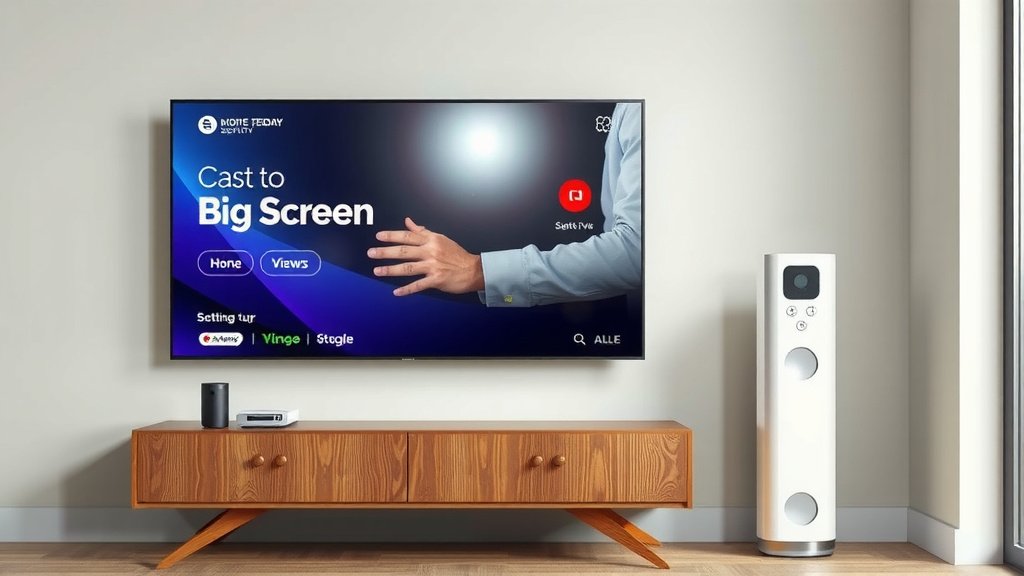
It’s easy to get these two terms confused, but they do different things. Casting sends a specific piece of content to your TV. Your phone then acts as a remote. Screen mirroring, on the other hand, duplicates your device’s entire screen onto the TV. Every tap, swipe, and app you open will show up.
When to Use Screen Mirroring
Screen mirroring is fantastic for things that don’t have a dedicated cast button. This includes things like presentations, showing a website you’re browsing, or sharing photos directly from your gallery app. It’s also useful for games that you want to play on a bigger screen. Keep in mind that mirroring can use more battery power and might sometimes have a slight delay. Many experts suggest it’s best for static content or short-form videos (Mayo Clinic).
When to Use Casting
Casting is generally preferred for watching videos or listening to music from apps. Because your TV fetches the content directly, it’s more efficient. Your phone or tablet is free to be used for other tasks. This is also why casting typically offers a smoother playback experience for streaming services. It’s the go-to for longer viewing sessions.
A Quick Checklist for Success
Ready to give it a try? Here’s a simple rundown to ensure you have everything you need:
- Make sure your TV and casting device (or smart TV) are on the same Wi-Fi network.
- Ensure your casting device is plugged in and powered on.
- Download and set up any necessary apps (like Google Home or the app you want to cast from).
- Locate the cast icon within your chosen app.
- Select your TV or casting device from the list.
- Relax and enjoy your content on the big screen!
Conclusion
You’ve learned that casting content to your TV is an accessible upgrade for almost any home. Whether your TV is smart or older, simple and affordable devices like a Chromecast or Fire Stick can bring your favorite apps and photos to the big screen. Remember to check that your devices are on the same Wi-Fi network. Start by trying to cast from an app you already use. This simple step can transform your viewing experience with minimal effort. Your next movie night is just a tap away!
Frequently Asked Questions
Why can’t I see the cast icon in my app?
The cast icon only appears in apps that have built-in casting support. Not all applications are designed to send content to your TV. If you don’t see the icon, your app might not support casting directly. You might need to use screen mirroring instead for that specific app.
Can I cast from my iPhone to a Samsung TV?
Yes, you often can! Many Samsung smart TVs support Apple’s AirPlay feature, allowing you to cast directly from your iPhone or iPad. You can also use third-party apps or a streaming stick like a Chromecast plugged into your Samsung TV to cast content.
Will casting drain my phone’s battery faster?
Casting is generally more battery-efficient than screen mirroring. This is because your TV or streaming device pulls the content directly from the internet. Your phone primarily sends the command and then can be used for other tasks. However, prolonged use while your phone is actively streaming or mirroring can still impact battery life.
What’s the difference between casting and screen mirroring?
Casting sends a specific piece of content, like a video, to your TV. Your phone acts like a remote control. Screen mirroring duplicates your entire device screen onto the TV. This means everything you do on your phone appears on the TV, which uses more power and might have a slight delay.
Do I need a separate streaming stick if I have a smart TV?
Not always. Many smart TVs have built-in casting capabilities and apps. However, if your smart TV is older or its built-in features are slow, a streaming stick like a Chromecast or Fire Stick can offer a faster, smoother experience and access to more apps.