Choosing the Right TV Size for Your Room
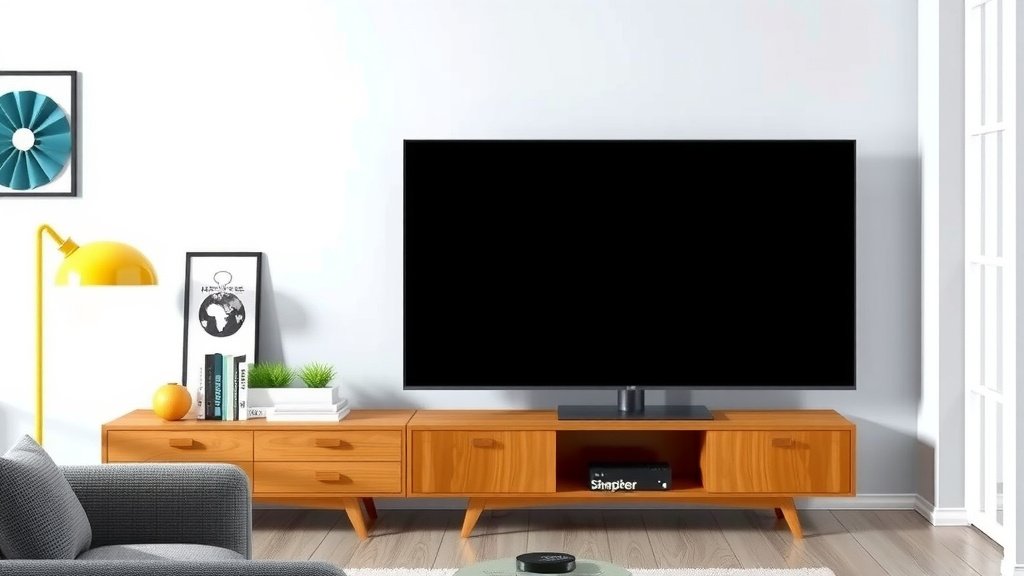
Choosing the right TV size for your room is all about finding the perfect balance between immersion and comfort. For most living rooms, a TV size between 55 and 75 inches offers a fantastic viewing experience without overwhelming the space. Consider your room’s dimensions and how far you’ll be sitting from the screen. A TV that’s too small can feel lost, while one that’s too big can strain your eyes. Our guide to choosing the right TV size explains how to find the perfect balance between immersion and comfort.
Getting the TV size wrong can lead to a less enjoyable movie night or game day. We found that many people struggle with this decision. It’s not just about the diagonal measurement; it’s about creating a setup that feels natural and visually pleasing for your specific room. Think about the focal point of your room and how the TV will integrate.
- Measure your room and seating distance first.
- Smaller rooms often suit 43-55 inch TVs.
- Medium to large rooms benefit from 55-75 inches.
- Consider wall mounting or stand placement.
- Don’t forget viewing angles and potential glare.
Let’s dive into some simple tips and calculations to help you pick the TV size that’s just right for your space.
Finding the Right TV Size for Your Living Space
Deciding on the correct TV size is less about guesswork and more about a few simple measurements. We’ve found that math can actually be your friend here! It helps ensure your new screen fits both your room and your viewing habits. Let’s break down how to figure out what size TV will make your movie nights shine.
Understanding Viewing Distance: The Golden Rule
The most important factor for picking the right TV size is how far away you’ll be sitting. A TV that’s too close can feel overwhelming, and one too far away just won’t show you all the detail. It’s like trying to read a book from across the room – you miss a lot!
The Simple Math for Your Sofa
Experts and manufacturers often suggest a viewing distance based on your TV’s resolution. For a standard 1080p HD TV, a good rule of thumb is to multiply the screen’s diagonal size by 1.5 to 2.5. For a 4K TV, which has a much sharper picture, you can sit closer. We found that multiplying the diagonal by 1 to 1.5 is usually comfortable. Understanding your TV’s resolution helps determine the best size for your viewing distance.
Let’s put this into practice. If your favorite spot on the couch is about 6 feet (72 inches) away from where the TV will go, and you’re considering a 4K TV:
- Minimum distance: 6 feet (72 inches) / 1.5 = 48 inches diagonal screen size.
- Maximum distance: 6 feet (72 inches) / 1 = 72 inches diagonal screen size.
So, for a 6-foot viewing distance with a 4K TV, you’re looking at TV sizes roughly between 48 and 72 inches. This is a pretty wide range, and we’ll get into why room size matters next!
Room Dimensions: More Than Just a Number
While viewing distance is key, your room’s actual size plays a big role too. A massive TV in a tiny room can make it feel cramped, and a small TV in a cavernous space can disappear.
Small Room, Cozy TV
If you have a smaller living area, a bedroom, or even a kitchen nook, you don’t need a giant screen. We found that TVs in the 32 to 50-inch range often provide the best experience. These sizes are less likely to dominate the room and offer a comfortable viewing angle without forcing you to move your head around too much.
Medium to Large Rooms: Room to Grow
For most standard living rooms, bedrooms, or family rooms, the sweet spot is usually between 55 and 75 inches. These sizes offer an immersive experience for 4K content without feeling overwhelming. If your room is quite large, or you have a dedicated home theater space, you might even consider going up to 85 inches or more!
Practical Considerations for Placement
Think about where your TV will actually live. Will it sit on a stand, or will you mount it on the wall? This impacts how you perceive its size and how much space it takes up.
On a Stand: Measure Twice, Buy Once
If you plan to use a TV stand, make sure the TV’s width and depth will fit comfortably. You don’t want it hanging off the edge! Also, consider the height. You want the middle of the screen to be roughly at eye level when you’re seated. Many stands have a certain height range they accommodate.
Wall Mounting: Creating a Focal Point
Wall mounting can make a TV feel like a piece of art, especially larger screens. It also frees up floor space. However, ensure your wall is sturdy enough, especially for heavier, larger TVs. Remember that mounting can place the TV higher than a stand would, so adjust your viewing distance and angle accordingly. Many experts recommend the bottom of the screen be about 20-30 inches from the floor for a typical living room setup.
Beyond Size: Other Factors to Keep in Mind
While size is a primary concern, a few other elements can influence your final decision. We learned that considering these can lead to an even better viewing setup.
Viewing Angles and Glare
Where will people be sitting relative to the screen? If you have a wide seating area with people often watching from the sides, you’ll want a TV with good viewing angles so the picture doesn’t degrade. Also, think about where your windows are. Excessive glare from sunlight can ruin the picture quality. You might need to adjust TV placement or consider anti-glare screen technologies.
Content is King (and Queen!)
What do you watch most? If it’s fast-paced action movies or sports, a larger screen can really enhance the experience. For casual TV watching or news, a smaller screen might be perfectly adequate. We found that the type of content often dictates how large a screen feels “right.”
Your Quick TV Size Checklist
Here’s a simple way to summarize your decision-making process:
- Measure your seating distance from the screen.
- Calculate the ideal TV size range for that distance and your TV’s resolution (remember 4K lets you sit closer!).
- Assess your room’s dimensions to ensure the TV won’t overpower the space.
- Consider your placement options (stand vs. wall mount) and any height restrictions.
- Think about viewing angles and potential window glare.
- Jot down the sizes that fit all these criteria.
Conclusion
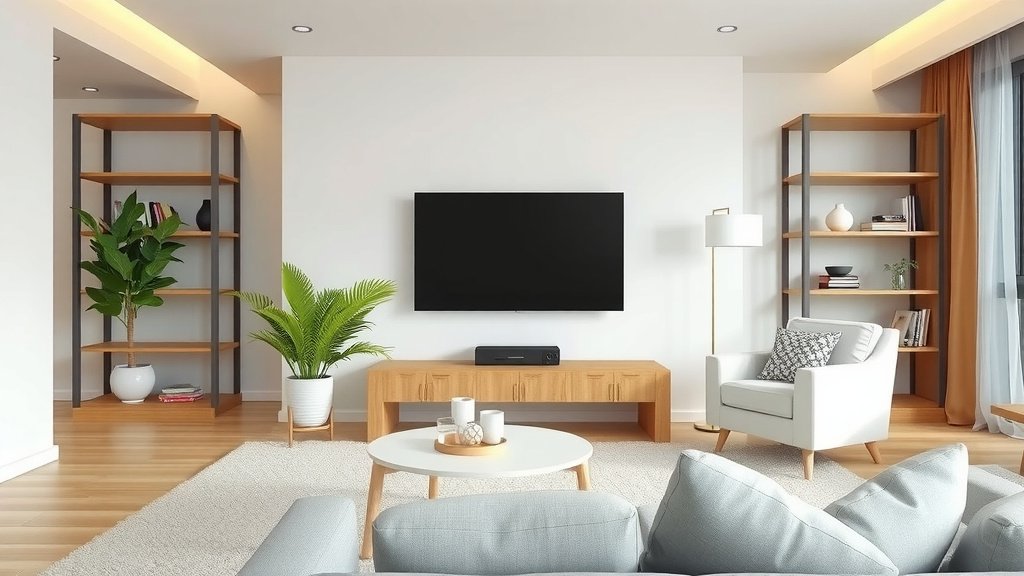
You’ve learned that the perfect TV size is a blend of viewing distance and room dimensions. We found that measuring your couch-to-screen distance is your first essential step. Then, consider your room’s layout and how the TV will integrate. Whether you’re in a cozy apartment or a spacious home, there’s a TV size that will enhance your viewing experience. Don’t forget practicalities like wall mounting or stand placement. Now, take your measurements and step confidently towards finding your ideal screen!
Frequently Asked Questions
How do I know if a TV is too big for my room?
If a TV’s size makes you feel overwhelmed or forces you to constantly move your eyes to take in the whole picture, it’s likely too big. We found that a TV should feel immersive, not imposing. Your room should still feel balanced after the TV is in place.
Can I use the same TV size in my bedroom as my living room?
Generally, no. Bedrooms are often smaller, and you might sit closer to the TV. We found that smaller TVs, perhaps in the 32-50 inch range, are usually better suited for bedrooms to avoid making the space feel cramped.
Does the TV’s resolution affect the ideal size?
Yes, absolutely! Higher resolutions like 4K allow you to sit closer to a larger screen without seeing individual pixels. We found that for 4K, you can generally choose a larger TV for the same viewing distance compared to an older 1080p model.
What if I have multiple seating areas at different distances?
This is common. You’ll need to find a compromise. We recommend choosing a size that works well for your primary seating position. For secondary spots, consider if the viewing angles are decent or if the size is still comfortable even if not perfectly ideal.
Should I account for the TV stand or wall mount in my room size calculation?
Yes, you should. A large TV on a stand will take up more physical space and appear larger than a wall-mounted TV of the same diagonal size. We found that considering the TV’s total footprint, including any stand or mount, is important for overall room aesthetics.