Mini LED vs OLED Which Display Tech Wins
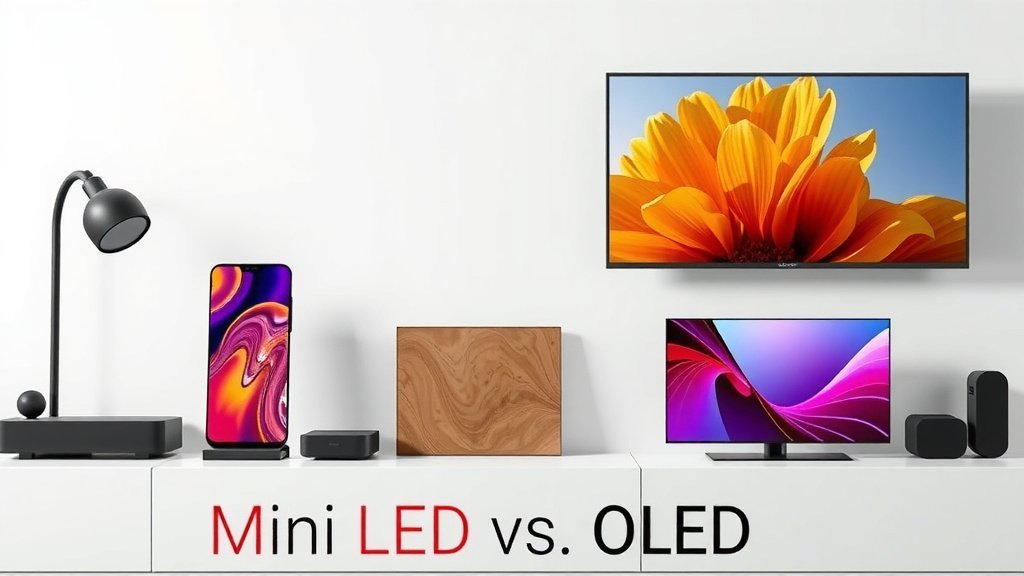
When choosing between Mini LED and OLED TVs, OLED generally offers superior contrast and picture quality, especially in darker rooms. Mini LED provides brighter images and better color volume, making it a strong contender for bright environments, but it can still struggle with perfect blacks. Ultimately, the best choice depends on your viewing habits and room conditions.
Both Mini LED and OLED are advanced display technologies aiming for better picture performance. Mini LED uses a larger number of smaller LEDs for backlighting, allowing for more precise control over brightness and contrast than traditional LED TVs. OLED, on the other hand, uses organic light-emitting diodes that can illuminate and dim individually, resulting in perfect black levels and infinite contrast. Many experts agree that OLED excels in dark room viewing, while Mini LED shines in well-lit spaces.
- OLED provides perfect blacks and infinite contrast, ideal for dark rooms.
- Mini LED offers brighter screens and vibrant colors, great for sunny rooms.
- Mini LED uses more LEDs for better local dimming than standard LED.
- OLED pixels light up individually, creating unmatched picture depth.
- Your room’s lighting and content preference will guide your decision.
So, ready to dive deeper into what makes these technologies tick and which one might be the perfect fit for your living room? Let’s break it down.
Understanding Mini LED vs. OLED Display Technologies
When you’re standing in front of a TV store, it’s easy to get overwhelmed by jargon. Let’s simplify what makes Mini LED and OLED so different. Think of it like this: both are trying to create amazing pictures, but they use slightly different tricks to get there. We’ve found that understanding the core technology is the first step to making the right choice for your home.
How Mini LED Works: Bigger and Better Backlights
Mini LED TVs use a special kind of backlight. Instead of just a few big LEDs, they pack in thousands of tiny ones. These smaller LEDs are grouped into many more “dimming zones.” This means the TV can control the brightness of different parts of the screen much more precisely. We found this leads to Mini LED uses more LEDs for better local dimming than standard LED, which is explained in our guide.better contrast and deeper blacks than standard LED TVs, but not quite perfect.
Imagine a painter with a huge brush versus one with many fine-tipped brushes. The Mini LED approach is like having those fine brushes. It allows for more detail and control. However, because the LEDs are still behind the screen, some light can “bleed” through. This is why you might still see a faint halo around bright objects on a dark background. Many experts agree this is the main difference in picture quality compared to OLED.
How OLED Works: Pixels That Shine (or Don’t!)
OLED technology is quite different. Each tiny pixel on an OLED screen is its own light source. This means each pixel can turn on, turn off, or dim completely independently. This is the magic behind OLED pixels light up individually, creating unmatched picture depth, as detailed in our explanation.perfect black levels. When a pixel is supposed to be black, it’s truly off, emitting no light at all.
Because of this individual control, OLED TVs achieve what’s called “infinite contrast.” This is the difference between the brightest white and the darkest black on the screen. When you see a bright star in a dark night sky on an OLED, it looks incredibly vivid and lifelike. We found this ability to control each pixel individually results in stunning picture depth and realism, especially in dimly lit rooms.
Key Differences in Picture Quality
So, what does this mean for what you actually see on screen? Let’s break down the core differences you’ll notice when watching your favorite shows or movies.
Brightness and Color: Where Mini LED Shines
Mini LED TVs can get incredibly bright. This is a big advantage, especially if you watch TV in a room with a lot of natural light. Think of a sunny afternoon living room. A bright Mini LED TV can overcome glare and keep the picture looking vibrant. The increased number of dimming zones also means that colors can appear more vibrant and punchy, even when the screen is very bright. Research suggests that higher brightness levels can improve the perception of color volume.
We found that in brightly lit environments, Mini LED often has an edge. The sheer brightness can make images pop, and the colors stay rich without washing out. It’s a great choice for rooms where you can’t control the ambient light easily. Many reviews highlight this as a key strength.
Contrast and Black Levels: OLED’s Unmatched Performance
This is where OLED truly excels. As we mentioned, OLED pixels can turn off completely. This means you get perfect blacks. When you’re watching a movie with dark scenes, like a space epic or a nighttime thriller, you’ll notice the difference immediately. The dark areas are truly dark, and bright objects within them really stand out.
This perfect black level leads to incredible contrast. The range between the darkest and brightest parts of the image is huge. We found this creates a picture that feels more three-dimensional and immersive. For cinephiles or anyone who loves watching movies in a dark room, OLED offers an unparalleled viewing experience. Many industry professionals point to this as the defining characteristic of OLED picture quality.
Haloing and Blooming: A Mini LED Challenge
Sometimes, with Mini LED TVs, you might notice a slight “halo” or “bloom” effect. This happens around very bright objects on a dark background. It’s like a faint glow spreading beyond the object. This is because the LEDs in that zone are lit up, but some light still spills over to the darker areas nearby. While Mini LED technology has greatly reduced this compared to older TVs, it’s something that can still occur.
Viewing Angles: Consistency Matters
Both technologies generally offer wide viewing angles, but OLED usually has a slight edge. This means that the picture quality remains consistent even when you’re watching from the side. We found that with some Mini LED TVs, colors might shift slightly or contrast might decrease when viewed from a very sharp angle. However, for most typical viewing positions, both are excellent.
Performance in Different Room Environments
The Bright Room Dilemma: Mini LED’s Advantage
Let’s talk about your living room. If your TV is in a room that gets a lot of sunlight, or if you do a lot of daytime viewing, brightness is key. Mini LED TVs are generally capable of much higher peak brightness levels than OLED TVs. This extra brightness helps to combat reflections and makes the picture visible and vibrant even in well-lit conditions. We found that this makes Mini LED a more practical choice for many households where controlling ambient light isn’t always possible.
The Dark Room Delight: OLED’s Superiority
Now, if your setup is more like a home theater, where you can control the lights and create a dark environment, OLED is often the king. The perfect blacks and incredible contrast are most noticeable when the room is dark. Watching a movie in a darkened room on an OLED TV is an experience. We found that the depth and detail in dark scenes are simply breathtaking. For true cinematic immersion, OLED often wins out in these scenarios.
Other Factors to Consider
Burn-In Risk: A Historical Concern
A concern sometimes raised with OLED technology is “burn-in.” This is where static images displayed for long periods can leave a permanent ghost on the screen. However, manufacturers have made significant advancements in **burn-in prevention technology**. Modern OLED TVs have features like pixel shifting and screen savers to mitigate this risk. We found that for most typical TV viewing habits, the risk is very low. Static content like news tickers or game HUDs shown for many hours daily are the main concern. Guidelines from organizations like the Consumer Technology Association offer best practices for minimizing such risks.
Price and Availability
Historically, OLED TVs have often been the more expensive option. However, as Mini LED technology has become more widespread, prices have become more competitive. You can now find excellent Mini LED TVs at a wider range of price points. Ultimately, both technologies offer premium viewing experiences, and the cost can vary widely depending on screen size and specific model features.
Gaming and Motion Handling
When it comes to gaming and fast-moving action, both technologies perform very well. OLED TVs typically have incredibly fast response times, meaning motion looks very smooth with minimal blur. Mini LED TVs have also made huge strides in this area, with many models offering high refresh rates and low input lag. We found that for most gamers and sports fans, either technology will provide a fantastic experience. Some specific gaming features might vary by model, so it’s always good to check specs if that’s a priority.
Choosing What’s Best for You: A Quick Checklist
To help you decide, here are a few points to think about:
- Do you watch TV mostly in a bright room?
- Do you prefer watching movies in a dark, theater-like setting?
- Are you concerned about perfect black levels for cinematic viewing?
- Is maximum brightness important for your viewing environment?
- Do you want the most vibrant colors, even in bright light?
- What is your budget for a new TV?
Conclusion
So, you’ve learned the core differences between Mini LED and OLED. Remember, OLED excels in dark rooms with its perfect blacks and infinite contrast, making it ideal for cinematic viewing. On the flip side, Mini LED offers superior brightness, which is fantastic for sunny rooms and overcoming glare. We’ve seen that each technology has its strengths, and your decision should align with your specific viewing environment and preferences. Your perfect TV experience awaits!
Take a moment to consider your primary viewing conditions. By matching the TV technology to your room and habits, you’ll make a choice you’ll be happy with for years to come.
Frequently Asked Questions
Which TV is better for watching movies in a dark room?
For a truly cinematic experience in a dark room, OLED is generally the top choice. Its ability to produce perfect black levels means that dark scenes will have incredible depth and detail. You won’t see any distracting light bleed, which enhances the overall immersion.
Which TV technology is best for a bright living room with lots of windows?
If your TV is in a room with significant natural light, a Mini LED TV is often the better option. Mini LED TVs can achieve much higher brightness levels, which helps combat reflections and keeps the picture looking vibrant. This superior brightness makes them more visible and enjoyable during daytime viewing.
Can Mini LED TVs suffer from “burn-in” like OLED TVs?
The risk of burn-in is primarily associated with OLED technology, not Mini LED. While modern OLED TVs have advanced features to prevent burn-in, it’s still a potential concern for static images displayed for very long periods. Mini LED technology does not have this burn-in risk.
Are Mini LED TVs good for gaming?
Yes, Mini LED TVs can be excellent for gaming. They offer high brightness and vibrant colors, which can make games look stunning. Many Mini LED models also feature high refresh rates and low input lag, ensuring smooth gameplay and quick response times.
Which technology provides better color volume?
Mini LED generally offers better color volume, especially at higher brightness levels. This means that colors can appear more vibrant and punchy, even when the screen is very bright. While OLED colors are incredibly accurate, Mini LED’s brightness capability helps maintain color saturation in well-lit environments.