8 Bit Color on Your TV Explained
8-bit color on a TV refers to a display’s ability to show 256 distinct colors. This is because each pixel uses 8 bits of data to determine its color. While it was once the standard, most modern TVs now offer far more colors. So, if you’re wondering if your TV uses 8-bit color, it likely supports a much higher standard for better picture quality.
Think of bits as tiny switches controlling color. More bits mean more possible color combinations. 8-bit color was a big leap forward for TVs, allowing for more realistic images than older displays. However, the technology has advanced significantly, leading to displays with billions of colors for a richer viewing experience.
- 8-bit color means 256 possible colors per pixel.
- It was a common standard for older TVs.
- Modern TVs display millions or billions of colors.
- Higher bit depth leads to smoother color transitions and more detail.
Let’s break down what 8-bit color means for your viewing pleasure and how it compares to today’s TVs.
Understanding How TVs Show Color: The Bit Depth Story
You might be wondering, what exactly does 8-bit color mean for the pictures you see on your screen? In simple terms, it’s about how many different colors a TV can display. 8-bit color means a TV uses 8 bits of data for each primary color (red, green, and blue) per pixel. This adds up to a specific number of shades for each color. We found that this allows for This adds up to a specific number of shades for each color, and learning about adjusting your TV’s color can enhance this.256 different levels of red, 256 levels of green, and 256 levels of blue. When you combine these, you get a potential palette of millions of colors, but the way 8-bit works limits the visible shades in practice.
Think of it like mixing paint. If you only have 256 shades of red, 256 of green, and 256 of blue to work with, you can create many combinations. But compared to having thousands of shades of each, your color choices are more limited. This system was a big deal when it first came out, offering a noticeable improvement over earlier displays.
Breaking Down 8-Bit Color: The Numbers Game
Let’s get a little more specific about the math behind 8-bit color. Each bit can be either a 0 or a 1. So, with 8 bits, you have 28 possible combinations. This equals 256 distinct values. When you apply this to the three primary colors – red, green, and blue – each pixel has 256 possible shades for red, 256 for green, and 256 for blue.
When these primary colors are combined, the total number of unique colors you can theoretically create is 256 x 256 x 256. This gives you approximately 16.7 million possible colors. This number, 16.7 million, is often referred to as “true color” in computer graphics. So, even 8-bit color could display a vast spectrum of hues.
Why “Approximately” 16.7 Million? The Nuance of Displaying Color
While 16.7 million colors sounds like a lot, the actual *perceived* color depth can be influenced by how the TV processes and displays these colors. Sometimes, the way these shades are mapped can lead to subtle banding or less smooth transitions between colors. This is where the distinction between 8-bit and higher bit depths becomes more apparent to the viewer.
Many experts note that even with 16.7 million colors available, the limitations in encoding or display technology could mean you don’t see the full richness of every single one. It’s like having a huge box of crayons, but some colors are very similar.
8-Bit Color in Its Heyday: What It Meant for Viewers
Back when 8-bit color was the standard, it represented a huge leap forward in visual realism for television and computer monitors. Before this, displays might have shown only a few hundred or even just a few dozen colors. Imagine watching a movie with sky that had obvious stripes of blue, or skin tones that looked a bit unnatural.
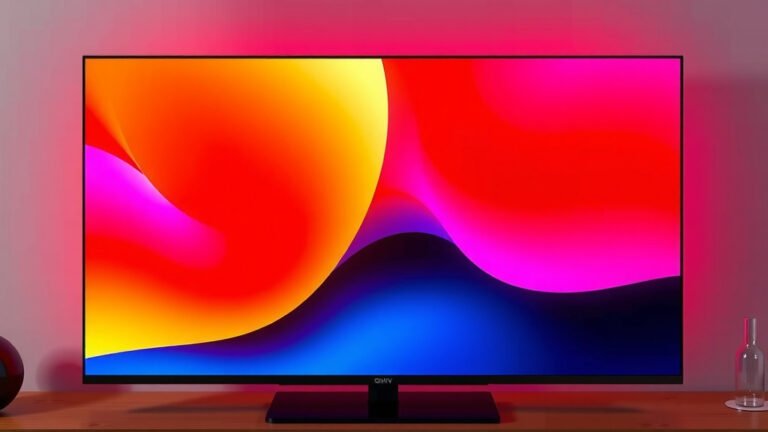
With 8-bit color, those kinds of issues were significantly reduced. You could see much more subtle variations in shading and tone. For example, a sunset would look more like a real sunset, with smooth gradients from orange to red to purple. This made images feel much more lifelike and immersive.
The Impact on Picture Quality
The improved color capabilities of 8-bit displays meant that directors and artists could use a wider palette to create their visuals. This allowed for greater detail in images, especially in areas with subtle color changes like skies, water, or complex textures. You could see finer details in shadows and highlights.
We found that this increased color depth also helped reduce “color banding,” which is when you see distinct lines or steps between shades of color instead of a smooth blend. This was especially noticeable in gradients like those found in skies or on smooth surfaces. So, for its time, 8-bit color provided a really good viewing experience.
Where 8-Bit Color Falls Short Compared to Modern TVs
So, if 8-bit color offers 16.7 million colors, why do modern TVs boast billions? This is where we need to look at something called “bit depth” and “color space.” Modern TVs often use 10-bit or even 12-bit color. This means they are using more bits to define the color for each primary color per pixel. This is where we need to look at something called “bit depth” and “color space,” and how HDR works.
A 10-bit display, for instance, uses 10 bits per color channel. This gives you 210, or 1,024 levels for red, green, and blue. The total number of colors becomes 1,024 x 1,024 x 1,024, which is over 1 billion colors! A 12-bit display goes even further, offering 212, or 4,096 levels per color, leading to over 68 billion colors.
The Advantage of Higher Bit Depths: Smoother Gradients and More Detail
The real benefit of these higher bit depths is the massive increase in the number of steps between the darkest and brightest shades, and between different hues. This allows for incredibly smooth color transitions. Think about the subtle variations in a human face or the deep blues of the ocean; higher bit depths can capture these with much greater fidelity.
Many video engineers point out that this extra precision is especially important for High Dynamic Range (HDR) content. HDR aims to display a wider range of brightness and color than standard formats. Without a higher bit depth, you can’t fully take advantage of the detail HDR offers, leading to lost information in the brightest and darkest parts of the image.
Color Banding: The Visible Difference
One of the most noticeable ways higher bit depth improves picture quality is by virtually eliminating color banding. With 8-bit color, especially in scenes with large areas of smooth color, you might still see those tell-tale bands. This can pull you out of the viewing experience.
Modern TVs with 10-bit or 12-bit color are far less prone to this. The sheer number of available shades allows for such fine gradations that the human eye typically can’t distinguish between adjacent colors. We found that this results in a much more natural and believable image. It’s like comparing a smooth watercolor painting to a posterized image.
8-Bit vs. Modern Standards: A Quick Comparison
To sum it up, here’s how 8-bit color stacks up against what you’ll find in most new TVs today. It’s helpful to see the numbers laid out:
| Color Depth | Bits Per Color Channel | Total Colors (Approximate) | Common Use Case |
|---|---|---|---|
| 8-bit | 8 bits | 16.7 million | Older TVs, standard definition content, older computer graphics. |
| 10-bit | 10 bits | 1.07 billion | Modern HDR TVs, 4K Blu-rays, professional video editing. |
| 12-bit | 12 bits | 68.7 billion | High-end professional displays, advanced digital cinema. |
As you can see, the jump from 8-bit to 10-bit or 12-bit is quite dramatic. It’s not just a small improvement; it’s a whole new level of color reproduction. Most of the 4K and HDR content you watch today is designed with these higher bit depths in mind.
Your TV’s Color Capabilities: What to Look For
When you’re thinking about your TV’s picture quality, bit depth is a key factor. While your TV might be capable of displaying 8-bit color, it’s very likely that it actually supports a higher bit depth, like 10-bit. This is crucial for enjoying modern content.
Look at your TV’s specifications. If it mentions support for HDR10, Dolby Vision, or HLG, it’s almost certainly capable of 10-bit color. Manufacturers usually highlight these features because they directly translate to a better viewing experience. So, while 8-bit color was once the standard, it’s likely your TV offers much more!
Quick Checklist: Is Your TV Using More Than 8-Bit Color?
Here are a few things that suggest your TV is operating beyond basic 8-bit color:
- Your TV supports High Dynamic Range (HDR) content.
- You see smooth, continuous color gradients in skies and other smooth areas.
- There is very little, if any, visible color banding.
- You can distinguish subtle shades in both very bright and very dark scenes.
- Your TV is from the last 5-7 years and supports 4K resolution.
- Specifications mention support for formats like HDR10, HDR10+, Dolby Vision, or HLG.
Conclusion
So, while 8-bit color was a major step forward, offering a significant visual upgrade with its 16.7 million potential colors, it’s important to know it’s not the peak of display technology. Modern TVs have moved well beyond this standard. You’re likely viewing content on a display that supports 10-bit or even 12-bit color, which provides billions of colors and dramatically smoother gradients.
Check your TV’s specifications for HDR support – this is your biggest clue. If your TV boasts HDR, it’s almost certainly capable of more than just 8-bit color, ensuring you get the best possible picture quality from today’s content. Take a moment to see what your TV can really do!
Frequently Asked Questions
Is 8-bit color still used in TVs today?
While 8-bit color was once the standard, most new TVs sold today support higher bit depths like 10-bit or 12-bit. These newer standards are essential for displaying High Dynamic Range (HDR) content effectively. You’ll find 8-bit color more commonly in older displays or for specific applications where extreme color accuracy isn’t critical.
What’s the difference between 8-bit and 10-bit color?
The main difference lies in the number of colors each can display. 8-bit color offers approximately 16.7 million colors, while 10-bit color provides over 1 billion colors. This massive increase in color depth allows for much smoother transitions between shades and reduces the appearance of color banding, leading to a more realistic image.
Can my 8-bit TV show HDR content?
An 8-bit TV typically cannot fully display the benefits of HDR content. HDR requires a wider range of brightness and color depth, which 10-bit or higher displays are designed to handle. While an 8-bit TV might process HDR signals, you won’t experience the full intended dynamic range and smooth color gradients.
What is color banding, and how does it relate to 8-bit color?
Color banding occurs when you see distinct lines or steps between shades of color, rather than a smooth blend. This is more noticeable on displays with lower bit depth, like 8-bit, especially in areas with subtle color gradients such as skies or sunsets. Higher bit depths, like 10-bit and 12-bit, offer so many more shades that color banding is virtually eliminated.
How do I know if my TV supports more than 8-bit color?
The easiest way is to check your TV’s specifications or look for HDR certifications. If your TV supports formats like HDR10, HDR10+, Dolby Vision, or HLG, it is almost certainly capable of 10-bit color. Additionally, if you see very smooth color gradients and very little color banding, your TV is likely operating at a higher bit depth.