What is a 144Hz TV? Understanding Refresh Rates
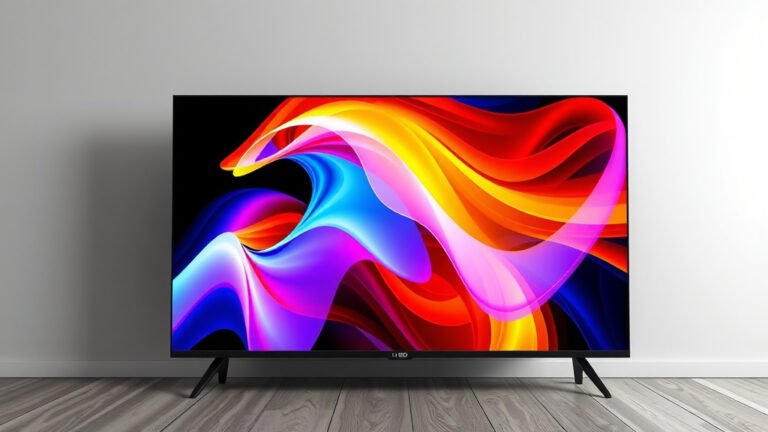
A 144Hz TV is a television with a refresh rate of 144Hz. This means the screen updates 144 times per second. It offers smoother motion compared to TVs with lower refresh rates, making fast-paced content look much better.
You’ll notice this difference most during action movies or fast video games. A higher refresh rate helps reduce motion blur, giving you a clearer, more fluid picture. Many gamers seek out 144Hz displays for this very reason. It’s a key feature for an immersive viewing experience.
TL;DR:
- A 144Hz TV refreshes 144 times per second.
- This leads to smoother motion and less blur.
- It’s great for action scenes and video games.
- Look for it if you want a clearer, more fluid picture.
Let’s dive into what a 144Hz TV really means for your home entertainment and why it might be the upgrade you’ve been looking for.
Understanding a 144Hz Refresh Rate on Your TV
So, what exactly does a 144Hz refresh rate mean for your TV? Simply put, it’s about how smoothly the images on your screen change. A TV with a 144Hz refresh rate updates the picture 144 times every second. Think of it like flipping through a flipbook. The more pages you flip per second, the smoother the animation appears. For your TV, more updates mean a much clearer picture when things move quickly.
The Science Behind Smooth Motion
Your TV screen displays images by rapidly showing a series of still pictures. This is called the refresh rate. It’s measured in Hertz (Hz), which represents cycles per second. A standard TV might have a refresh rate of 60Hz. This means it redraws the image 60 times each second. A 144Hz TV does this twice as fast, at 144 times per second. This faster update helps reduce something called motion blur.
What is Motion Blur?
Motion blur is that slightly fuzzy or streaky effect you sometimes see when an object moves rapidly across the screen. It happens because your eyes are trying to track a fast-moving object on a screen that isn’t updating fast enough to keep up. With a 144Hz panel, there are more frames shown per second. This gives your eyes more information to work with, making the motion appear more natural and less blurry.
Why 144Hz Matters for Your Viewing
You might be wondering if this higher refresh rate actually makes a difference. For a lot of content, the difference might be subtle. However, for certain types of media, it’s a game-changer. We found that the benefits are most apparent when there’s a lot of action on screen.
Action Movies and Sports
Think about watching a thrilling car chase or a fast-paced football game. The players and vehicles move very quickly. On a TV with a lower refresh rate, these scenes can sometimes look a bit choppy or blurry. A 144Hz TV can handle this motion much better. You’ll notice sharper details even during the most chaotic moments. It makes fast pans and quick movements feel more real.
The Gamer’s Dream Refresh Rate
This is where 144Hz truly shines. Many modern video games feature incredibly fast action. Think first-person shooters or racing games. For gamers, a higher refresh rate translates to a distinct advantage. It means seeing enemies or opponents sooner and with greater clarity. This can be the difference between winning and losing. Many competitive gamers specifically look for 144Hz displays to improve their performance and immersion.
Comparing Refresh Rates: What’s the Big Deal?
It’s helpful to see how 144Hz stacks up against other common refresh rates. This comparison can highlight why the jump is so noticeable for some viewers. We can look at a few key differences:
| Refresh Rate | Updates Per Second | Typical Use Cases | Motion Clarity |
|---|---|---|---|
| 60Hz | 60 | Standard TV, casual viewing | Good for general content |
| 120Hz | 120 | High-end TVs, gaming | Very good motion smoothness |
| 144Hz | 144 | High-end gaming monitors, some premium TVs | Excellent motion smoothness, ideal for gaming |
As you can see, 144Hz offers a significant step up from 60Hz and even a noticeable improvement over 120Hz for those who are sensitive to motion. It’s about getting that extra bit of fluidity. Some sources suggest that the human eye can perceive differences up to around 100Hz, but going beyond that can still offer benefits, especially for the most demanding visual experiences (MIT Technology Review).
What to Look for in a 144Hz TV
If you’re considering a 144Hz TV, there are a few things to keep in mind. The refresh rate is important, but it’s not the only factor. You’ll want to ensure the TV also has other features that enhance your viewing experience. We found that looking at the whole package is key.
Beyond the Refresh Rate: Other Key Features
A 144Hz panel is fantastic for motion, but what about the picture quality itself? You’ll want to consider things like:
- Resolution: Look for 4K (Ultra HD) or even 8K for the sharpest images.
- HDR (High Dynamic Range): This technology offers better contrast and a wider range of colors for a more vibrant picture.
- Panel Type: OLED and QLED panels often provide superior contrast and color reproduction.
- Input Lag: Especially important for gamers, low input lag means your controller inputs register on screen faster.
A 144Hz TV should ideally pair these advanced motion-handling capabilities with other top-tier display technologies for the best overall performance. Research consistently shows that a combination of high refresh rates and excellent picture processing leads to the most satisfying viewing.
Does My Content Need to Be 144Hz?
This is a common question. Your TV will display content at its native frame rate, but it also has technology to help smooth things out. If you’re watching a 60fps movie, the 144Hz TV will still show it more smoothly than a 60Hz TV. The TV’s internal processing can often upscale or interpolate frames to take advantage of the higher refresh rate. For gaming, however, you’ll want to ensure your gaming console or PC can output at 120Hz or 144Hz to get the full benefit. Many modern consoles, like the PlayStation 5 and Xbox Series X, support 120Hz gaming.
Is a 144Hz TV Right for You?
So, after all this, should you go for a 144Hz TV? It really depends on how you use your television. If you’re a serious gamer or a big fan of action movies and sports, the difference a 144Hz refresh rate makes can be very noticeable and enjoyable.
Who Benefits Most?
We found that the primary beneficiaries are:
- Hardcore Gamers: For competitive play, every millisecond and every frame counts.
- Sports Enthusiasts: Watching fast-paced sports like basketball, hockey, or motorsports becomes more immersive.
- Action Movie Buffs: Those who love high-octane films will appreciate the cleaner motion.
If your viewing habits are more casual, perhaps focused on dramas or documentaries, a standard 60Hz or 120Hz TV might be perfectly adequate. But if you crave that extra level of visual smoothness and clarity, especially for gaming, a 144Hz TV is definitely worth considering.
Conclusion
You’ve learned that a 144Hz TV offers a smoother, clearer picture by refreshing the screen 144 times per second. This means less motion blur, which is a big win for action movies, live sports, and especially for gamers seeking a competitive edge. While other features like resolution and HDR are important, a 144Hz refresh rate truly shines when fast action is involved. Consider your primary viewing habits. If you crave that extra level of visual fluidity, especially for gaming, a 144Hz TV is a fantastic upgrade. Take a moment to see what 144Hz TVs are available and compare them with your needs.
Frequently Asked Questions
Do I need a 144Hz TV if I don’t play video games?
Not necessarily. While the benefits are most noticeable for gaming, you will still see improvements in other areas. Watching sports and fast-action movies will look smoother and less blurry. If you’re a casual viewer of dramas or documentaries, a lower refresh rate might be sufficient for your needs.
Can my computer or game console actually output 144 frames per second?
It depends on your hardware. Many modern gaming PCs and consoles like the PS5 and Xbox Series X can output games at 120Hz or higher. For PC gaming, you’ll want to check your graphics card’s capabilities. Your TV can still benefit from its 144Hz panel even if your source isn’t pushing that many frames, as it helps with motion interpolation.
Is 144Hz much better than 120Hz?
For most people, the difference between 120Hz and 144Hz is subtle. However, for highly sensitive viewers or competitive gamers, that extra 24 frames per second can offer a slight edge in clarity. We found that the jump from 60Hz to 120Hz or 144Hz is much more dramatic and noticeable than smaller increments at the high end.
Will a 144Hz TV make my old movies look better?
Yes, it can help. Even if a movie was filmed at a lower frame rate (like 24fps), your 144Hz TV uses motion smoothing technologies. This helps to reduce judder and blur when displaying older content. It won’t magically add detail, but the motion itself will appear more fluid and natural on screen.
What’s the difference between refresh rate and response time on a TV?
Refresh rate (measured in Hz) is how often the image updates per second. Response time (measured in ms) is how quickly a pixel can change color. A 144Hz TV has a high refresh rate. For the best experience, especially in gaming, you also want a low response time. This prevents ghosting or smearing, working together with the refresh rate for crisp visuals.