4K vs 8K TV: Which Resolution Is Right for You
For most people today, a 4K TV offers the best balance of picture quality and price. While 8K TVs boast four times the pixels of 4K, the difference is often hard to see unless you have a very large screen or sit extremely close. 4K provides stunning clarity that satisfies most viewing needs right now.
The jump from 4K to 8K means a huge increase in resolution, packing 33 million pixels compared to 4K’s 8 million. Many experts agree that most viewers won’t notice the difference in typical home environments. Content created in 8K is also still quite rare, which limits the benefit.
- 4K TVs offer excellent picture quality for the price.
- 8K TVs have more pixels but the difference is often unnoticeable.
- Screen size and viewing distance greatly impact perceived resolution.
- Content availability for 8K is still limited.
Let’s break down what you really need to know about 4K versus 8K TVs so you can pick the right one for your home.
Understanding the Pixel Power: 4K vs. 8K Television
So, you’re looking at new TVs and seeing numbers like 4K and 8K thrown around. It can get a little confusing, right? We’re here to help you sort out what those terms actually mean for your viewing experience. Think of pixels as tiny dots that make up the picture you see. More pixels generally mean a sharper, more detailed image. Our guide to choosing a bedroom TV resolution can help you decide if 4K is sufficient.
What Exactly Are 4K and 8K Resolutions?
Let’s break down the raw numbers. A 4K TV, also known as Ultra HD (UHD), has a resolution of 3840 pixels wide by 2160 pixels tall. If you multiply those, you get about 8.3 million pixels. That’s a lot of tiny dots working together! This is a major upgrade from older HD TVs.
Now, an 8K TV takes things up a notch. It boasts a resolution of 7680 pixels wide by 4320 pixels tall. Doing the math here, that’s roughly 33 million pixels. That means an 8K screen has four times the pixels of a 4K screen. It’s like going from a regular photo to a super-high-definition photograph.
The Visual Difference: Can You Actually See It?
This is the big question, isn’t it? While 8K has more pixels, the human eye has limits. For most people, on a typical-sized TV (say, under 65 inches), sitting at a normal distance, the difference between 4K and 8K is often very hard to spot. You might not even notice it at all. It’s like having a super-fine-tipped pen versus a slightly less fine one – both can draw clear lines.
The Impact of Screen Size and Viewing Distance
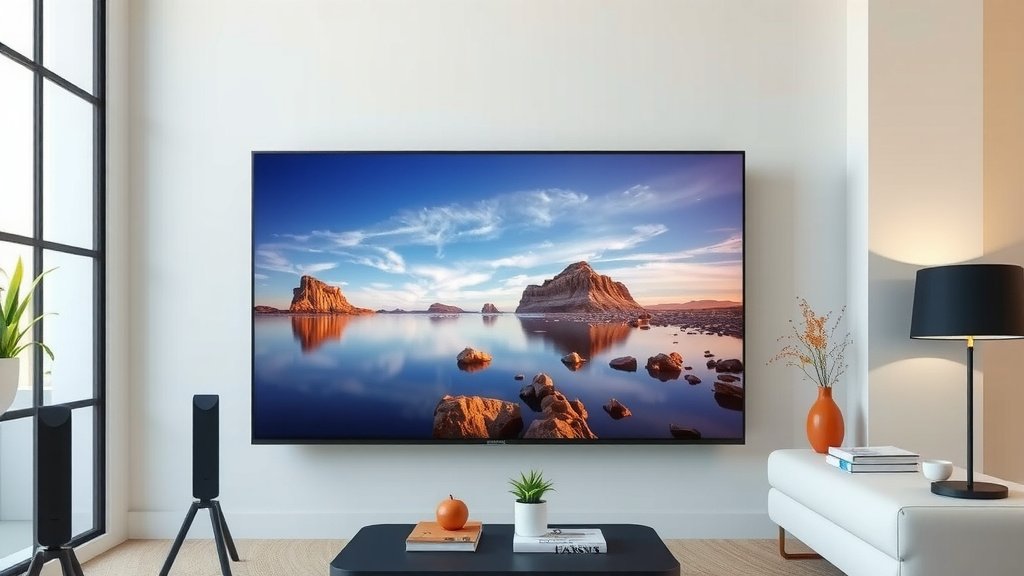
The magic really happens with larger screens and closer viewing. If you have a massive TV, like 75 inches or bigger, and you sit quite close, you’re more likely to perceive the extra detail 8K offers. Imagine standing right next to a detailed painting; you can see every brushstroke. If you stand far away, it all blends together smoothly.
Research shows that for the average living room setup, where you might be 6-8 feet away from a 55-inch TV, 4K resolution is already more than enough to deliver a stunning picture. You’d have to be practically nose-to-screen to appreciate the 8K jump in these scenarios. Many experts agree that the sweet spot for seeing 8K benefits is on screens 80 inches and above (DisplayMate).
Content is King: What Are You Watching?
Having a super-sharp TV is great, but what you watch matters even more. Right now, native 8K content is still quite rare. Think of it this way: if you only have a few 8K movies or shows available, your 8K TV will spend most of its time showing 4K or even lower-resolution content.
TVs have upscaling technology built-in. This means they take lower-resolution content (like 1080p or 4K) and try to intelligently fill in the extra pixels to make it look better on an 8K screen. Upscaling has gotten much better, but it’s still not the same as watching content that was originally filmed in 8K. For now, 4K content is abundant, offering a fantastic viewing library.
Upscaling: How TVs Fill in the Blanks
When you play a 4K movie on an 8K TV, the TV’s processor works hard. It analyzes the 4K image and guesses what the extra pixels should look like. This process can make 4K content look very good on an 8K screen. However, it’s an educated guess, not a perfect reproduction of original 8K detail. It’s like adding details to a sketch versus having a fully rendered drawing from the start.
Price and Value: Making the Smart Choice
Let’s talk about your wallet. The cost difference between 4K and 8K TVs is still quite significant. You can often get a really excellent 4K TV with a fantastic picture and smart features for a much lower price than a comparable 8K model. This means you can get a great viewing experience without breaking the bank.
The Cost Factor Today
If you’re looking for the best bang for your buck right now, 4K TVs are the clear winner. You can find a 55-inch or 65-inch 4K TV with amazing picture quality for well under $1,000. For that same price, you might only find a smaller or lower-tier 8K model, if one is even available.
Future-Proofing: Is 8K Worth the Investment?
The question of “future-proofing” is a common one. Will 8K become the standard like 4K did? It’s possible, but it will likely take time. As 8K content slowly becomes more available and prices drop, it might make more sense to invest. But for most people today, buying an 8K TV feels a bit like buying a Blu-ray player when DVDs were still king – you’re ahead of the curve, but the ecosystem isn’t quite there yet.
Consider your current viewing habits. Are you buying a TV for the next year or the next five to ten years? If you want the absolute best picture quality on the market today and have a large budget, an 8K TV might be appealing. But for the vast majority of consumers, a high-quality 4K TV offers superb performance that meets current needs perfectly.
When to Lean Towards 8K
There are a few scenarios where 8K might start to shine, even now:
- You’re planning on buying a very large screen TV (75 inches or more).
- You have the deepest pockets and want the latest technology.
- You sit extremely close to your television.
- You’re a professional who needs the absolute highest detail for specific tasks.
Making Your Decision: A Simple Checklist
To help you decide which resolution is right for you, ask yourself these quick questions:
- What is the size of your TV going to be?
- How far away will you typically sit from the screen?
- What kind of content do you usually watch (streaming, gaming, cable)?
- What is your budget for a new television?
- How important is having the absolute latest technology to you?
- Do you want a TV that will look great for years to come with readily available content?
Conclusion
Ultimately, the choice between a 4K and 8K TV boils down to your personal needs and budget. For most of you, a high-quality 4K TV provides an exceptional viewing experience that’s both stunning and affordable. You’ll find plenty of content and enjoy sharp, vibrant pictures without overspending. If you’re eyeing a very large screen or are an early adopter with a significant budget, 8K might tempt you. But for everyday viewing, 4K remains the smart, practical choice right now. Consider your screen size, viewing distance, and content habits to make the decision that’s best for your home theater.
Frequently Asked Questions
Will 8K TVs become common like 4K TVs did?
It’s possible 8K will become more common over time, but it’s a slow process. Content creation and wider availability are key. While 4K content is everywhere now, 8K content is still very limited. Prices also need to drop considerably for widespread adoption.
Is it worth buying an 8K TV if I mostly watch regular cable TV?
Probably not, at least not today. Your cable signal is likely not in 8K. While 8K TVs have upscaling technology, it’s still an enhancement of lower-resolution content. You won’t get the full benefit of 8K unless you’re watching native 8K content or playing 8K gaming.
How much closer do I need to sit to notice 8K differences?
Research suggests you’d need to be unusually close to a typical TV size (under 65 inches) to spot the difference. For larger screens, say 75 inches or more, sitting within 6-8 feet might make the 8K detail more apparent. But for average viewing distances, 4K is already excellent.
Can my old 4K Blu-rays look better on an 8K TV?
An 8K TV will upscale your 4K Blu-rays. This means the TV’s processor will intelligently add pixels to make the image fit the 8K screen. While it can look very good, it won’t magically add detail that wasn’t there in the original 4K recording. It’s an improvement, but not true 8K.
What’s the biggest advantage of a 4K TV over an 8K TV right now?
The biggest advantage is clearly value for money. You can get a fantastic, large 4K TV with amazing picture quality for much less than a comparable 8K model. This allows you to save money or put it towards other home entertainment upgrades, like a soundbar or streaming devices.