Smart TV Features Explained: What You Need to Know
Smart TV features are the built-in capabilities that go beyond just watching regular cable channels. These features allow your TV to connect to the internet, stream movies and shows, and even run apps. Understanding them can help you get the most out of your viewing experience.
Your smart TV acts like a mini-computer right in your living room. It opens up a world of entertainment beyond traditional broadcast. From Netflix binges to video calls, these smart functions offer a lot of convenience and fun.
- Smart TVs connect to the internet.
- They let you stream content from apps.
- You can download and use TV-specific apps.
- Many offer voice control and screen mirroring.
Ready to dive deeper? Below, we’ll explain each of these smart TV features in simple terms so you can become a true smart TV wizard.
Understanding Your Smart TV’s Built-In Capabilities
So, your TV is “smart.” What does that really mean for you? It means your television is now more than just a screen for scheduled programming. It’s a gateway to a whole universe of entertainment. We’ll break down the most common features you’ll find. This will help you navigate and use your smart TV with confidence.
Connecting Your TV to the Internet: The Foundation
The first step to unlocking your smart TV’s potential is connecting it to your home’s internet. Think of this as giving your TV its own brain. Without this connection, all those exciting apps and streaming services are just out of reach.
How Internet Connectivity Works
Most smart TVs offer two main ways to get online: Wi-Fi or an Ethernet cable. Wi-Fi is wireless, just like your phone or laptop. You’ll find your network name and enter your password. An Ethernet cable is a direct wired connection. It can sometimes offer a more stable signal. We found that for most households, Wi-Fi is perfectly adequate for streaming.
Why a Stable Connection Matters
A strong internet connection is key. It ensures smooth playback of movies and shows. Buffering or pixelation can be frustrating. Many experts suggest at least 25 Mbps download speed for 4K streaming (Consumer Reports). You’ll want to make sure your internet plan can handle it. This will prevent those annoying pauses during your favorite scenes.
Streaming Apps: Your On-Demand Entertainment Hub
This is likely the feature you’re most excited about! Streaming apps are like having Netflix, Hulu, or Disney+ built right into your TV. You don’t need extra boxes or devices for many popular services.
Popular Streaming Services
You’ll find major players like Netflix, Amazon Prime Video, YouTube, and Disney+. Many TVs also come with built-in apps for music streaming, like Spotify or Pandora. This means you can have a dance party right in your living room!
Finding and Installing Apps
Your TV will have an “app store” or a similar section. Here, you can browse and download apps. Some apps come pre-installed. Others you’ll need to add yourself. It’s usually a straightforward process. Just search for the app, select it, and choose “install.”
Subscription Services Explained
It’s important to remember that most streaming apps require a subscription. While the app is free to download, you’ll need to pay a monthly fee for access to the content. Think of it like a digital cable package. We found that bundling services can sometimes save you money, but always compare prices.
Web Browsing on Your TV
Some smart TVs include a web browser. This lets you surf the internet directly on your big screen. You can check the news, look up recipes, or even browse social media. It’s not always as smooth as a computer, but it’s handy for quick checks. We found that using a compatible wireless keyboard and mouse makes browsing much easier.
Voice Control: The Hands-Free Helper
Tired of searching for the remote? Many smart TVs now come with voice control. You can speak commands to change channels, adjust volume, or even search for specific shows. It’s like having a personal assistant for your TV.
How Voice Assistants Work
You’ll typically activate voice control by pressing a button on your remote or by saying a wake word, like “Hey Google” or “Alexa.” Your TV then listens for your command. Many models integrate with popular voice assistants. This allows for control of other smart home devices too.
Making the Most of Voice Commands
Be clear and specific with your commands. Instead of saying “Play that movie,” try “Play ‘The Matrix’ on Netflix.” We found that practicing your commands will help you get the best results. It can truly simplify how you interact with your TV.
Screen Mirroring and Casting: Sharing Your Screen
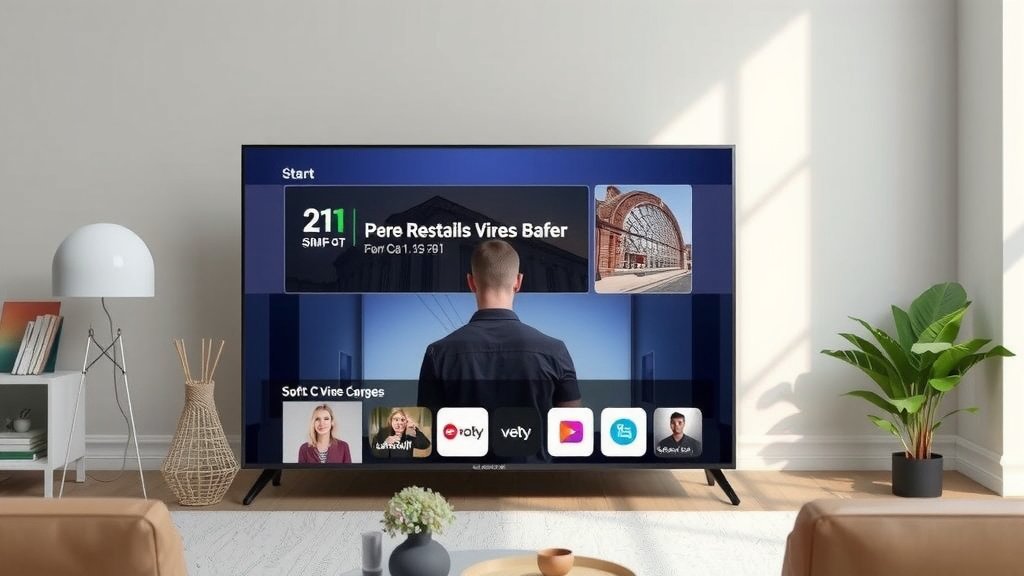
Want to show photos from your phone to everyone in the room? Screen mirroring or casting lets you do just that. You can display what’s on your smartphone, tablet, or laptop directly onto your TV screen.
What’s the Difference?
Screen Mirroring duplicates your device’s entire screen onto the TV. Everything you do on your phone appears on the TV. Casting, often done through apps like Google Chrome (Chromecast), sends specific content (like a video) from an app to your TV. Your phone then acts as a remote. We found casting to be more efficient as it doesn’t drain your phone battery as quickly.
Supported Devices and Apps
Compatibility varies by TV brand and your mobile devices. Most modern smartphones and tablets support these features. You’ll often find options within your device’s settings menu or within specific apps.
Gaming Features for a Better Experience
If you’re a gamer, your smart TV might have specific features to enhance your play. This can include things like low input lag or special gaming modes.
Low Input Lag
Input lag is the delay between when you press a button on your controller and when the action appears on screen. Lower input lag means a more responsive gaming experience. Many smart TVs offer a “Game Mode” that helps reduce this lag. We found that this mode can make a noticeable difference in fast-paced games.
Smart TV Checklist for Getting Started
Ready to put your smart TV to work? Here’s a quick checklist to get you going:
- Connect your TV to your home Wi-Fi or Ethernet.
- Download your favorite streaming apps.
- Log in or create accounts for subscription services.
- Test out the voice control feature.
- Try screen mirroring with your smartphone.
- Explore any available gaming modes if you play games.
Conclusion
You’ve now got a clear picture of what makes your smart TV “smart.” From connecting to the internet to streaming your favorite shows and even using voice commands, these features put a universe of entertainment at your fingertips. We’ve seen how easy it is to get started with the basics. Now, you’re ready to make your TV work for you. Take a moment to try out one new feature this week. You’ll be amazed at how much more enjoyment you can get from your television.
Frequently Asked Questions
Do I need to pay for internet to use smart TV features?
Yes, you will need a home internet connection to access most smart TV features. This includes streaming apps and web browsing. Your internet service provider will bill you for this connection. We found that most homes already have an internet plan that works well for smart TVs.
Can I download apps that aren’t in my TV’s app store?
Generally, you are limited to the apps available in your TV manufacturer’s official app store. Some TVs might allow side-loading of apps, but this can be complex and may void your warranty. It’s best to stick to the pre-approved apps for safety and ease of use.
How do I know if my smart TV supports screen mirroring from my phone?
Most modern smart TVs and smartphones support screen mirroring or casting. Check your TV’s manual or the manufacturer’s website for specific details. You can often find the option within your phone’s quick settings menu. We found that compatibility is usually quite good between newer devices.
Is voice control accurate enough to use reliably?
Voice control has improved greatly and is quite reliable for many tasks. You can change channels, adjust volume, and search for content. For best results, speak clearly and be specific with your commands. We found it can be a real time-saver once you get the hang of it.
Will a slower internet speed affect my smart TV experience?
Yes, a slow internet speed can definitely impact your smart TV. You might experience buffering, lower video quality, or long loading times. For smooth 4K streaming, experts recommend a download speed of at least 25 Mbps. We recommend checking your internet speed to ensure it meets your needs.