Is a Bigger TV Always Better? The Truth Revealed
No, a bigger TV isn’t always better. While size matters to some, it depends on your room size and viewing distance. A TV that’s too large can feel overwhelming and actually hurt your viewing experience.
Finding the right TV size is about balance. You want immersion without strain. We’ve found that considering your specific setup leads to a much more enjoyable movie night or gaming session.
- Bigger isn’t always better for TVs.
- Room size and viewing distance are key factors.
- Too large a TV can be a bad viewing experience.
- Finding the right balance creates immersion without strain.
Let’s break down how to pick the perfect TV size for your home.
It’s easy to get swept up in the idea of a massive TV screen. Bigger screens offer a more immersive experience, no doubt. But is bigger always the answer for *your* living room? Let’s figure out what size truly fits your space and your eyes.
Choosing the Right TV Screen Size for Your Space
The ideal TV size isn’t a one-size-fits-all situation. Your viewing distance is the most important factor. We found that sitting too close to a giant screen can make you feel like you’re at the front row of a movie theater. It can be uncomfortable and make it hard to see the whole picture.
Understanding Viewing Distance and TV Size
Many experts recommend a specific viewing distance based on your TV’s resolution. For 4K TVs, which are most common now, the ideal distance is closer than you might think. You want to be close enough to appreciate the detail, but far enough to avoid seeing individual pixels.
Calculating Your Ideal Viewing Distance
A good rule of thumb for 4K TVs is to sit at a distance that is about 1 to 1.5 times the diagonal screen size. For example, if you have a 55-inch TV, you should ideally be sitting between 55 and 82.5 inches away. That’s about 4.5 to 6.8 feet.
What About Older HD TVs?
If you’re still rocking an older 1080p HD TV, you’ll want to sit a bit further back. The recommended distance is roughly 1.5 to 2.5 times the screen size. This helps prevent you from noticing the lower resolution.
We’ve seen many people buy a TV that’s simply too big for their room. They end up leaning their heads back and forth. This is the opposite of what you want for a relaxing viewing experience.
Room Size and TV Placement
Beyond just the distance, think about the overall size of your room. A huge TV can dominate a small room, making it feel cramped. Conversely, a tiny TV can get lost in a large open space.
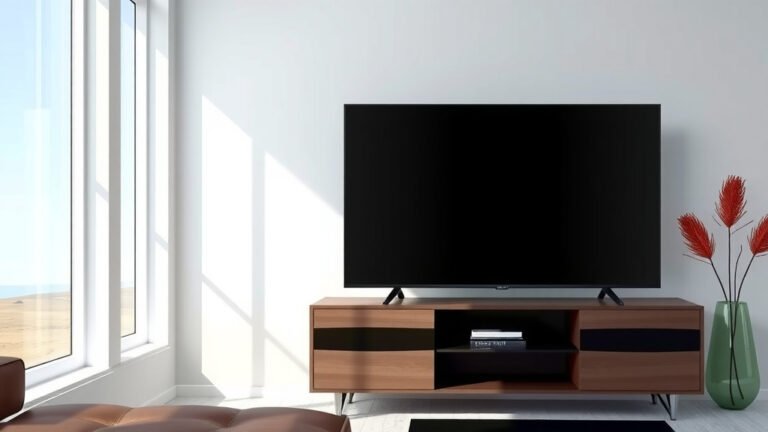
Consider where you’ll be placing the TV. Will it be on a stand or mounted on the wall? Wall mounting can sometimes make a TV feel smaller because it doesn’t take up floor space. But a large TV on a small wall can still feel overwhelming.
The “Eye-Level” Rule
Experts at the Society of Motion Picture and Television Engineers (SMPTE) suggest your eyes should be about 40 degrees into the screen for the best immersion. For most people, this translates to the viewing distance calculations we discussed. You want the screen to fill a good portion of your field of vision without being *too* much.
| TV Size (Diagonal) | Recommended Minimum Distance (Approx.) | Recommended Maximum Distance (Approx.) |
|---|---|---|
| 40 inches | 3.3 feet | 5.0 feet |
| 50 inches | 4.2 feet | 6.3 feet |
| 55 inches | 4.6 feet | 6.9 feet |
| 65 inches | 5.4 feet | 8.1 feet |
| 75 inches | 6.3 feet | 9.4 feet |
This table is a good starting point. Remember, personal preference plays a role too. If you love feeling fully immersed, you might lean towards the closer end of the recommended range.
What Affects Your TV Viewing Experience?
It’s not just about the size. Picture quality is a huge part of enjoying your TV. A massive screen with poor resolution or color accuracy won’t be enjoyable, no matter the size.
Resolution and Picture Quality
Today, 4K resolution is standard. This means there are many more pixels packed into the screen. More pixels allow for sharper, more detailed images. This is especially noticeable on larger screens.
We’ve found that a larger 1080p TV can actually look worse than a smaller 4K TV. This is because the pixels are more spread out and visible. So, if you’re going big, make sure it’s 4K or higher!
Your Content Matters Too
Are you mostly watching sports, movies, or playing video games? Fast-paced action, like in sports or video games, benefits from a larger screen for that immersive feel. However, if you’re primarily watching older shows or documentaries, the need for a giant screen might be less pressing.
Think about the actual content you consume. Does it look good on a large screen? Most modern content is produced with high resolution in mind, so you’re usually in good shape.
Making the Final Decision
So, to answer the big question: is a bigger TV always better? The research and our findings suggest it’s a big **no**. It’s about finding that sweet spot where the size enhances your viewing without causing strain or discomfort.
Here’s a quick checklist to help you decide:
- Measure your viewing distance.
- Consider your room’s dimensions.
- Think about the TV’s resolution (aim for 4K).
- What kind of content do you watch most?
- Are you looking for immersion or just a replacement?
- Does the TV size fit aesthetically in your room?
By carefully considering these points, you can avoid the common pitfall of buying a TV that’s too large. You’ll end up with a screen that perfectly complements your space and your viewing habits, ensuring countless hours of enjoyable entertainment.
Conclusion
So, is a bigger TV always better? Our research and findings clearly show that it’s not. The ideal TV size is a personal choice, deeply tied to your room’s dimensions and how far you’ll be sitting from the screen. Trying to fit a massive TV into a small space or sitting too close to a giant screen can actually ruin your viewing experience. Focus on finding that perfect balance for immersion without eye strain or feeling overwhelmed. Before you buy, measure your space and consider your viewing habits. This thoughtful approach ensures you’ll get a TV that truly enhances your home entertainment.
Frequently Asked Questions
What’s the easiest way to figure out my ideal TV size?
Measure the distance from your couch to where the TV will be. For 4K TVs, multiply that distance by 0.84 for the minimum screen size and by 1.2 for the maximum. This gives you a great starting range.
Can a TV be too big for a small room?
Yes, a TV can definitely be too big for a small room. A screen that’s too large can dominate the space, making it feel cramped and uncomfortable. You might also find yourself constantly turning your head to see the whole picture, which is tiring.
Does the type of content I watch affect the best TV size?
Yes, it does. Fast-action content like sports or video games benefits more from a larger, immersive screen. If you primarily watch news or documentaries, a smaller, more appropriately sized TV might be perfectly adequate and more comfortable.
Is it okay to sit closer to a bigger TV than recommended?
While personal preference varies, sitting too close to a large TV, especially a 4K one, can mean you start seeing individual pixels. This reduces the picture quality and can cause eye strain. Sticking closer to the recommended distances usually offers the best experience.
Should I prioritize resolution over size if I have a tight budget?
Generally, yes. A smaller TV with a higher resolution (like 4K) will likely provide a much better picture than a larger TV with a lower resolution (like 1080p). You’ll see clearer details and a sharper image, which is often more enjoyable than just a big screen.